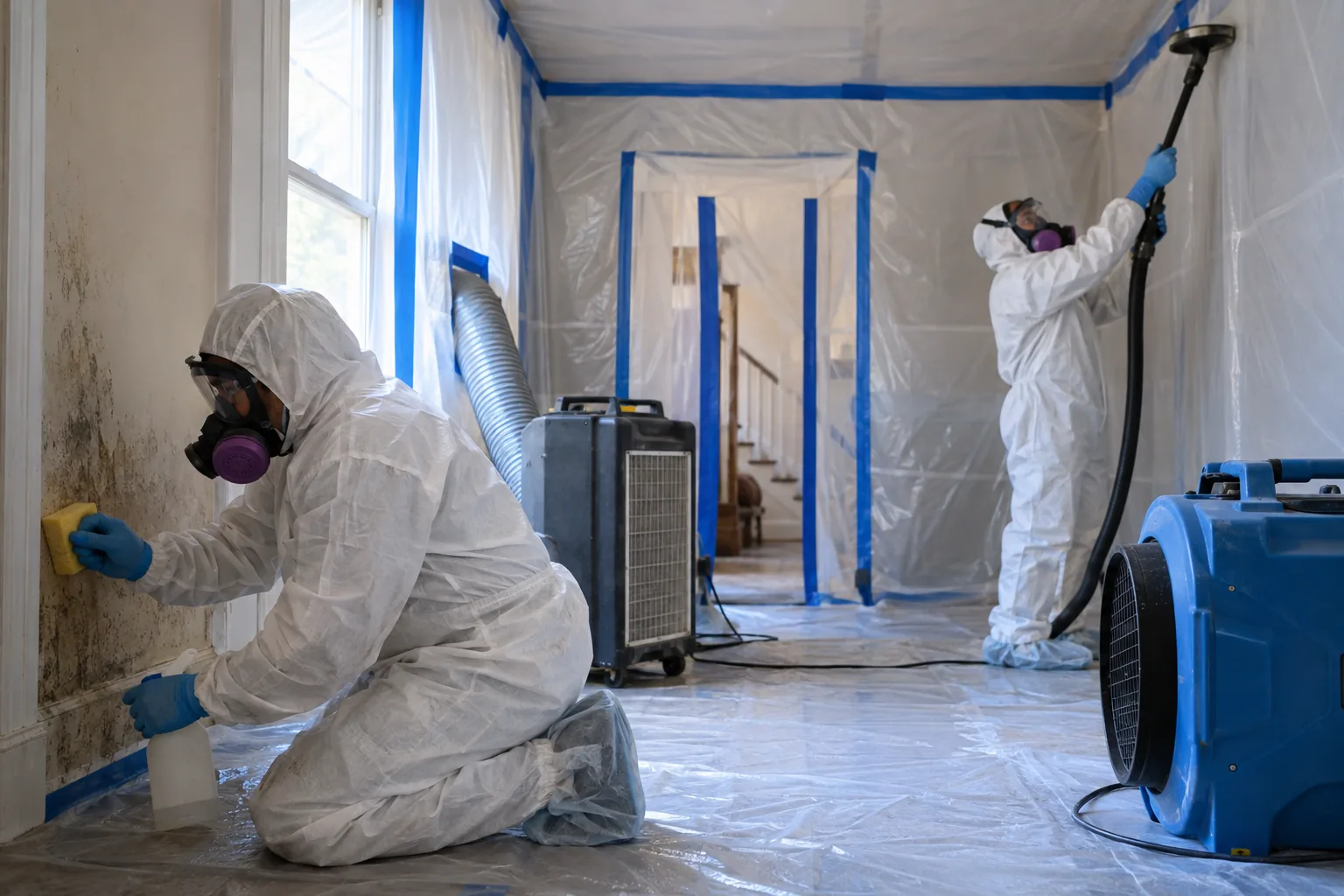
Mold remediation is a controlled building-cleanup project, not a single chemical treatment. A useful plan explains the water source, the boundary of affected material, how occupants and clean rooms will be protected, which materials can be cleaned, and what “finished” will mean.
Start with the situation, not a product
Most people do not begin with a service name. They notice an odor, a stain, wet material, or a problem documented during a property inspection. Use the condition you have now to choose the most useful first conversation.
| What you know now | Reasonable place to start |
|---|---|
| Visible growth after a leak or a repeatedly wet area | Remediation assessment that defines the moisture source, extent, and material decisions |
| Musty odor but no visible source | Moisture-focused inspection before choosing samples or demolition |
| Wet framing, insulation, or odors below the home | Crawl-space inspection covering drainage, ground vapor, humidity, and wood moisture |
| Growth on roof sheathing or rafters | Attic assessment separating roof entry from condensation and exhaust problems |
| Odor or growth near the air handler or ducts | HVAC-focused assessment before operating or cleaning a suspected contaminated system |
| Water is entering now or materials are still wet | Water and safety triage; active hazards and drying come before a mold label |
| Cleanup is complete and walls are ready to close | Post-remediation verification against criteria agreed before reconstruction |
| Remediation removed drywall, flooring, or trim | Repair coordination only after the assembly is clean, dry, and ready to rebuild |
What a complete remediation scope should cover
A complete scope usually moves in this order: stop the moisture, assess visible and suspected hidden damage, establish controls, remove or clean affected material, dry the assembly, and repair only after the area meets the agreed completion criteria.
- Source correction: plumbing, roof, drainage, condensation, or humidity.
- Containment: barriers and pressure control appropriate to the size and disturbance.
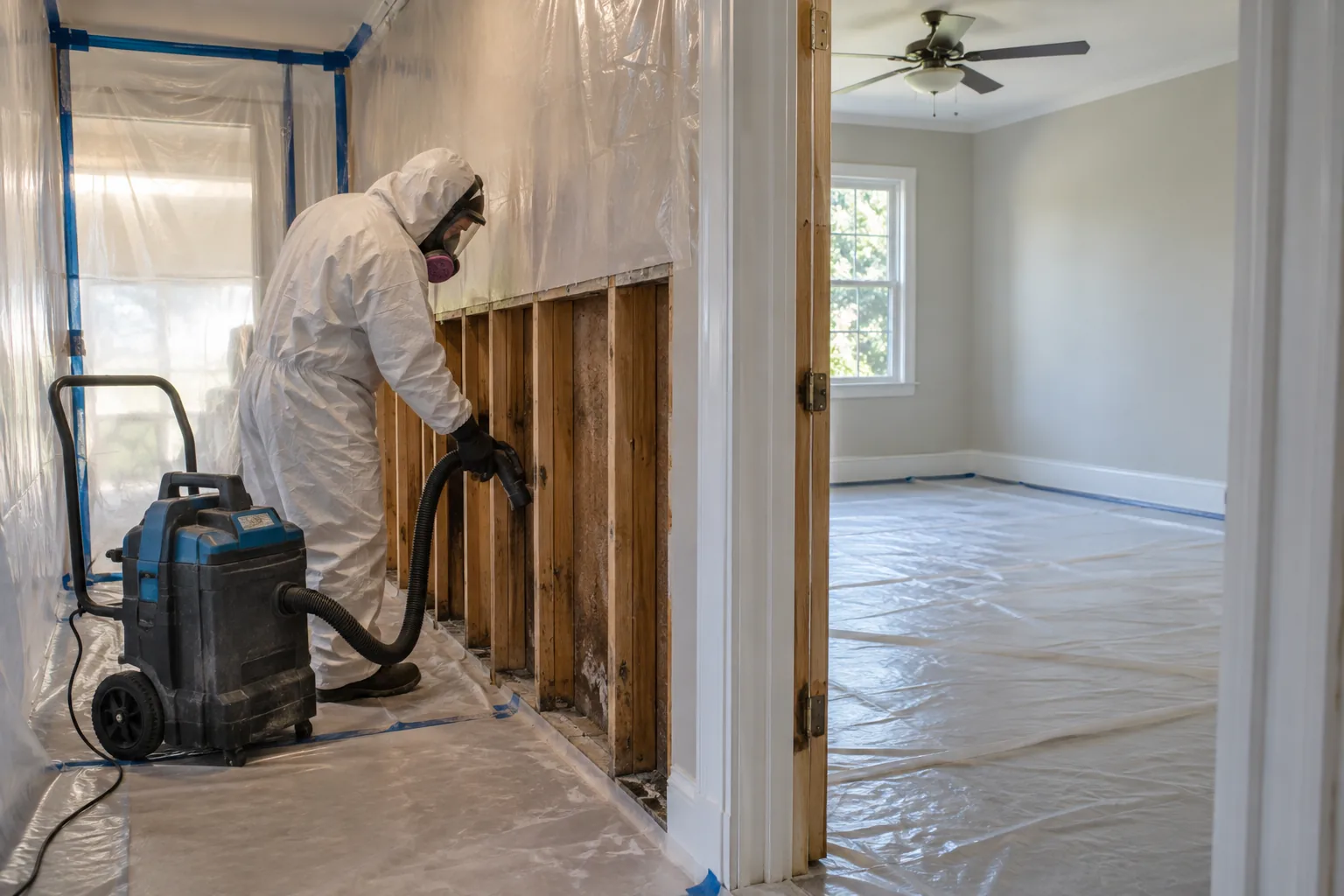
- Removal and cleaning: physical removal is central; merely killing mold does not remove particles.
- Drying: readings should support the decision to close walls or reinstall finishes.
- Verification: visual cleanliness, absence of musty odor, corrected moisture, and testing when it will answer a defined question.
Remediation, removal, mitigation, and restoration are not interchangeable
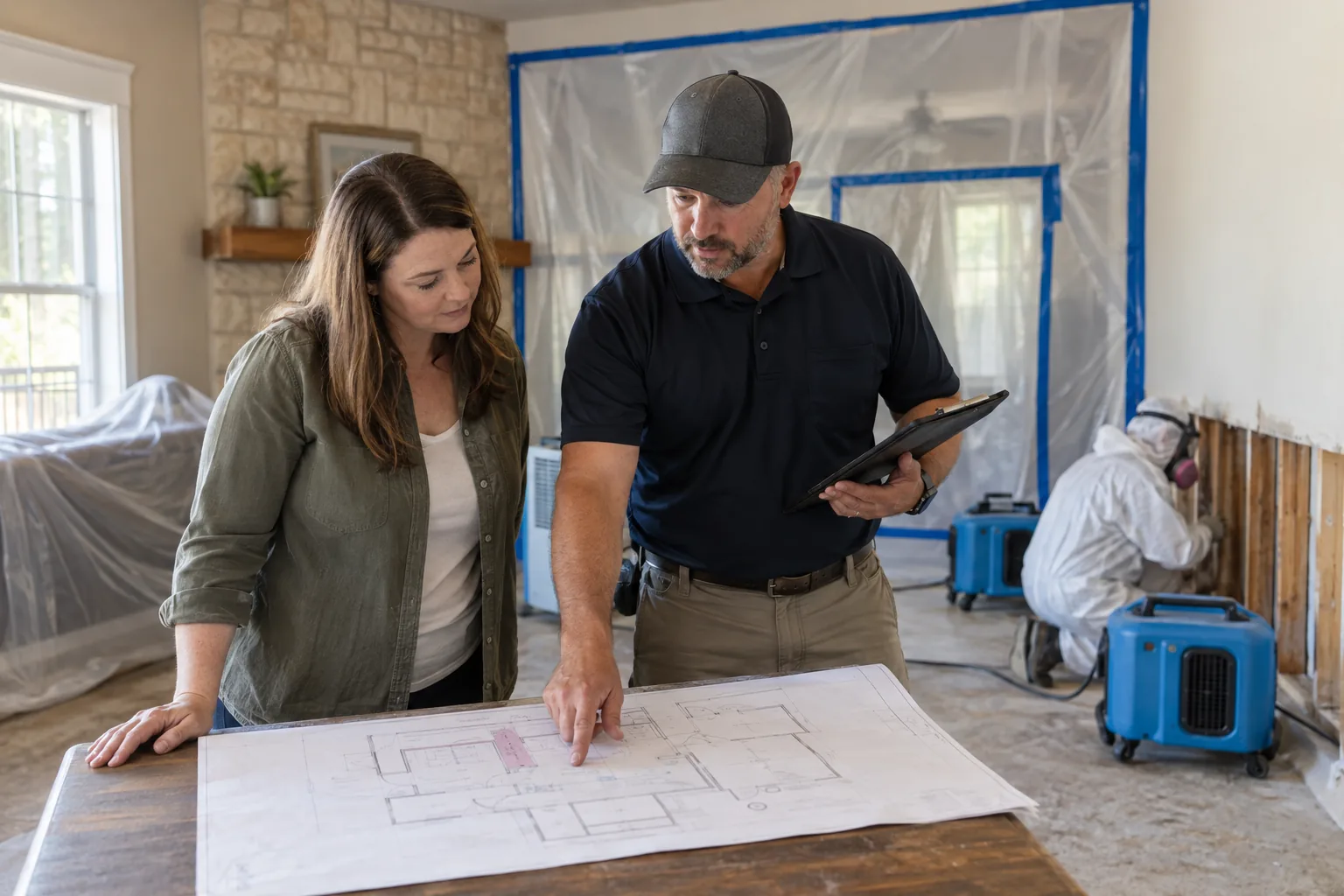
Mitigation limits immediate damage, such as extracting water or setting drying equipment. Remediation addresses contaminated materials and conditions. Removal is one part of remediation. Restoration rebuilds drywall, insulation, trim, flooring, or other finishes afterward.
Ask whether a quote includes all four stages. A low remediation price may exclude leak repair, demolition, rebuild, contents cleaning, or verification.
Jackson moisture patterns worth checking
Local relevance should improve the inspection checklist, not become a claim about a house that nobody has seen. In Jackson and Madison County, a provider may need to distinguish several recurring pathways:
- Crawl-space moisture: ground vapor, drainage, plumbing leaks, damp insulation, and uncontrolled humid air can affect floor framing from below.
- Cooling-season condensation: cold supply components, drain pans, condensate lines, and poorly insulated ducts can remain wet even when there is no roof or plumbing leak.
- Storm and roof entry: wind-driven rain, flashing defects, damaged roofing, and water traveling along framing can place the visible stain away from the actual entry point.
- Occupied-room moisture: bathroom exhaust, laundry, cooking, furniture against exterior walls, and indoor humidity can create localized surface or concealed conditions.
These are diagnostic starting points, not proof of a cause. The useful output is a moisture map and a written explanation connecting the observed pattern to the proposed repair. Location-specific pages in the Jackson service-area guide should be used as context, never as a substitute for inspecting the property.
When professional help makes sense
Professional judgment is prudent when the affected area is larger than about 10 square feet, water came from sewage or another contaminated source, growth is hidden inside assemblies, the HVAC system may be involved, or cleanup would expose someone with asthma, chronic lung disease, allergies, or immune suppression.
These conditions do not prove that an expensive project is required. They mean the job deserves a careful assessment before materials are disturbed.
How to compare remediation providers
Ask for a written scope, proof of insurance, relevant training or certification, references for similar projects, a change-order policy, and an explanation of how the plan follows recognized guidance. Tennessee requires a contractor license for certain projects at or above statutory thresholds; verify the classification and monetary limit when the work qualifies.
Questions homeowners ask
How long does mold remediation take?
Can I remain in the home during remediation?
Do I need mold testing before choosing a remediation service?
Sources and standards
Editorial guidance on this page is based on current public-health and contractor resources. A property-specific scope still requires an on-site assessment.