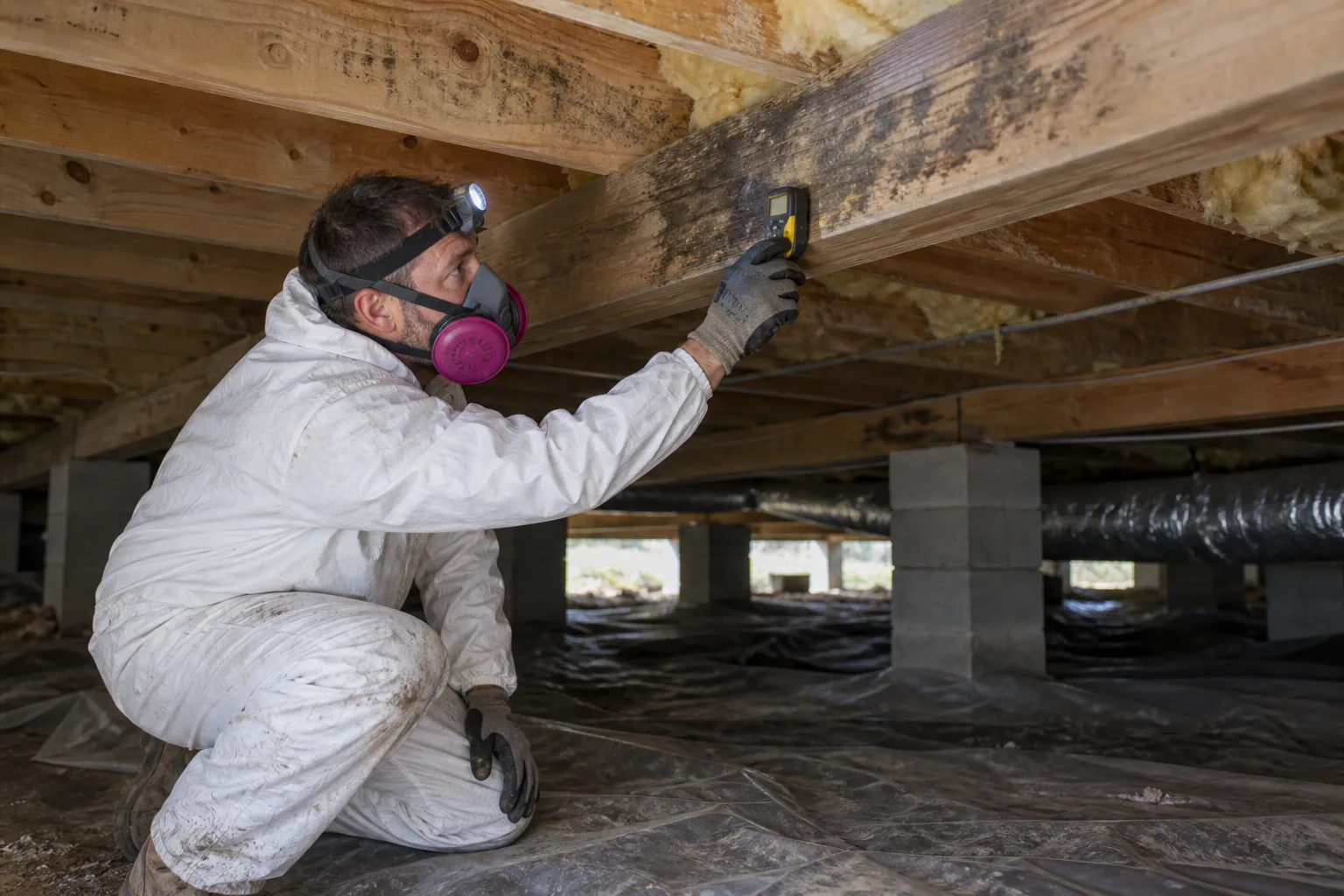
The visible growth is only one part of a crawl-space problem. Before anyone sprays joists or sells an encapsulation package, the scope should explain where moisture enters, which materials are affected, whether wood is structurally sound, and how the space will stay dry after cleaning.
Diagnose the moisture before choosing the treatment
Inspect for plumbing leaks, standing water, failed drains, downspout discharge near the foundation, missing ground vapor coverage, wet insulation, open vents, and condensate problems. A contractor should also measure—not guess at—material moisture and relative humidity.
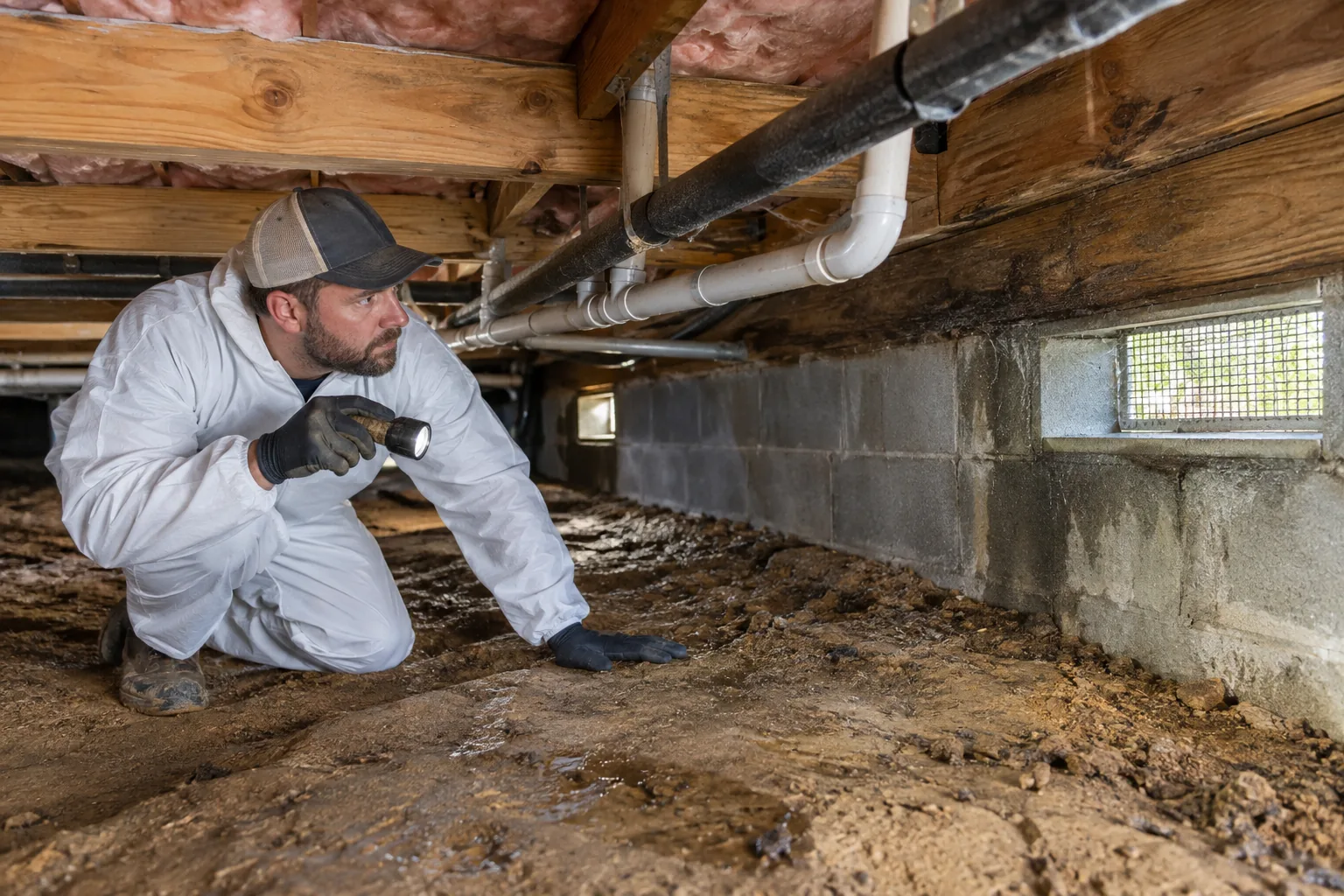
What crawl-space remediation may include
- Removing wet insulation, debris, or other unsalvageable porous material.
- Containing access and protecting the occupied space above.
- HEPA vacuuming and cleaning accessible framing using methods suited to the material.
- Drying the wood and documenting moisture readings.
- Correcting ground moisture with an appropriately detailed vapor barrier or encapsulation system.
- Managing humidity with drainage, air sealing, conditioning, or a correctly sized dehumidifier.
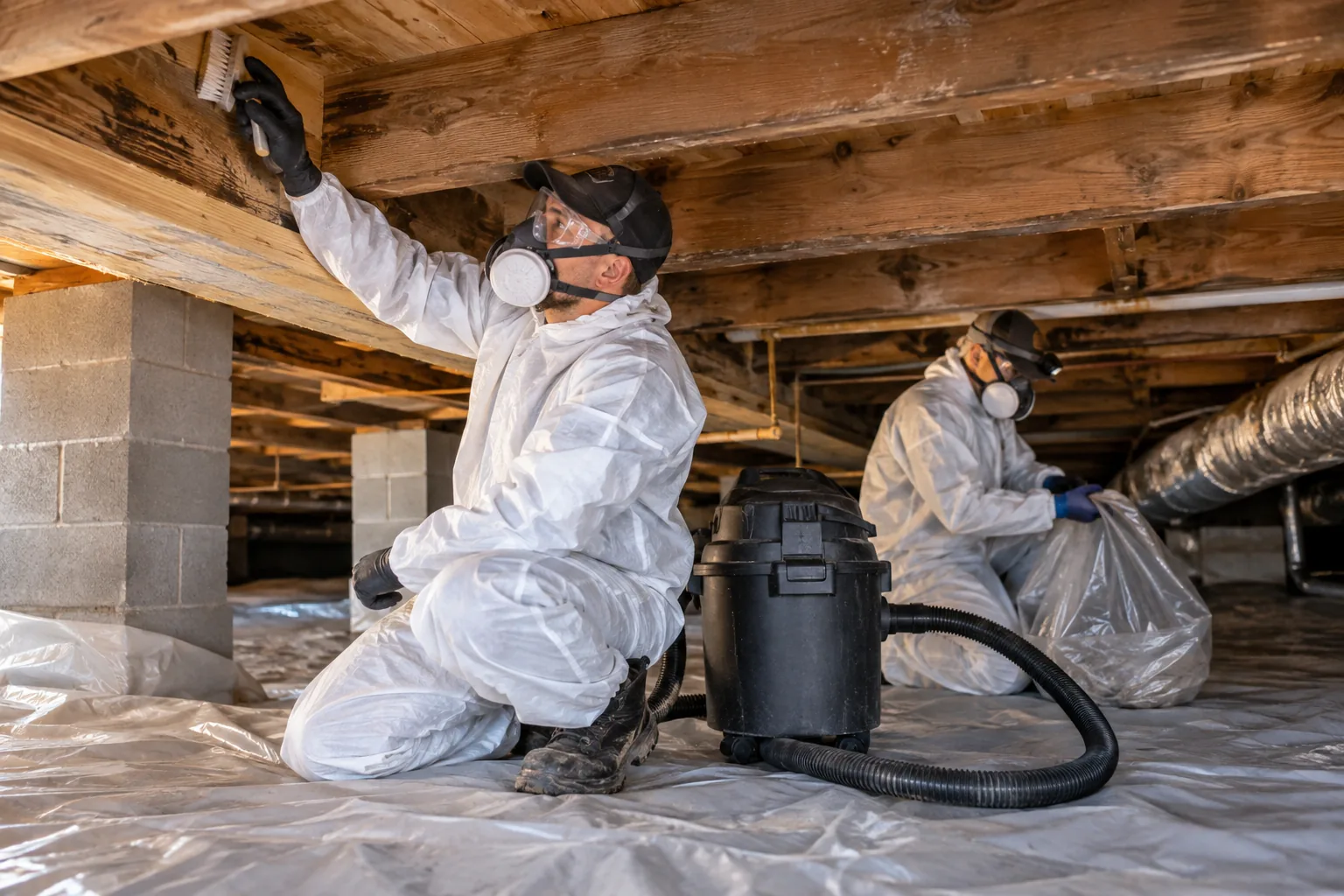
Encapsulation is not automatically the answer
Encapsulation can reduce ground moisture and uncontrolled outside-air exchange, but it should not cover an active leak, wet framing, unresolved drainage, or damaged material. Ask how seams, walls, piers, penetrations, and access doors will be sealed; where bulk water will go; how humidity will be controlled; and what maintenance the system requires.
What to require in the quote
Request separate line items for debris removal, insulation, cleaning, drying, vapor barrier or encapsulation, drainage, dehumidification, electrical work, structural repair, and follow-up. That separation makes it easier to see whether the moisture solution is appropriately matched to the problem.
Questions homeowners ask
Should crawl-space vents stay open?
Can stained joists be cleaned instead of replaced?
Sources and standards
Editorial guidance on this page is based on current public-health and contractor resources. A property-specific scope still requires an on-site assessment.