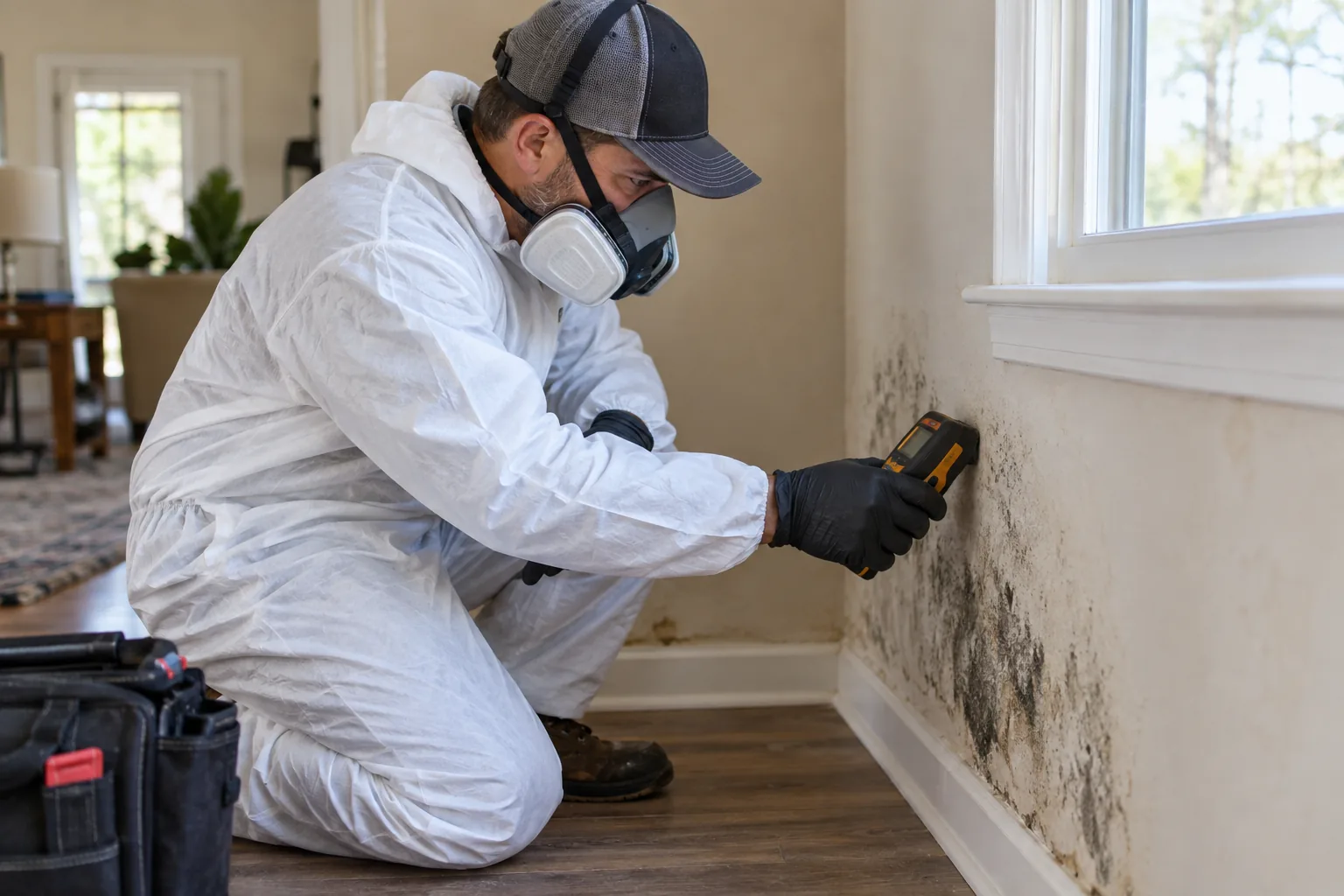
If you find black or dark growth, avoid scraping, brushing, or opening the wall until you understand the extent and moisture source. Take photos, keep people away from the immediate area, and address any active leak that can be stopped safely.
What the color can—and cannot—tell you
Many molds can appear black, dark green, gray, or brown. Color, texture, and a photograph cannot reliably determine species or exposure risk. The cleanup decision still depends on affected area, material type, hidden growth, water source, HVAC involvement, and occupant vulnerability.
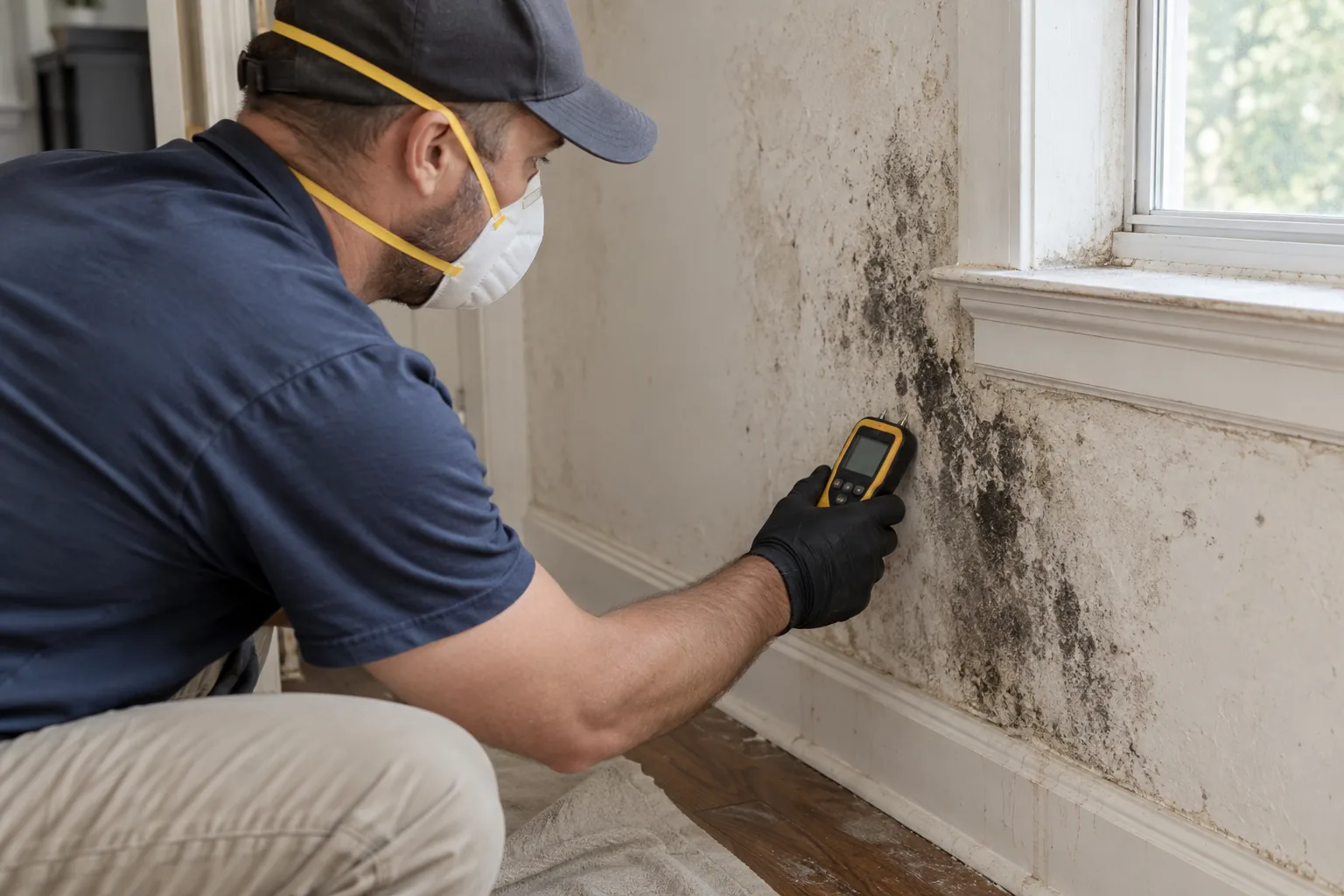
When to step back and call a professional
Seek qualified help for widespread or hidden growth, contaminated water, damaged structural material, HVAC involvement, or a job that requires demolition. People with asthma, chronic lung disease, immune suppression, or significant allergies should not participate in cleanup; health questions belong with a healthcare professional.
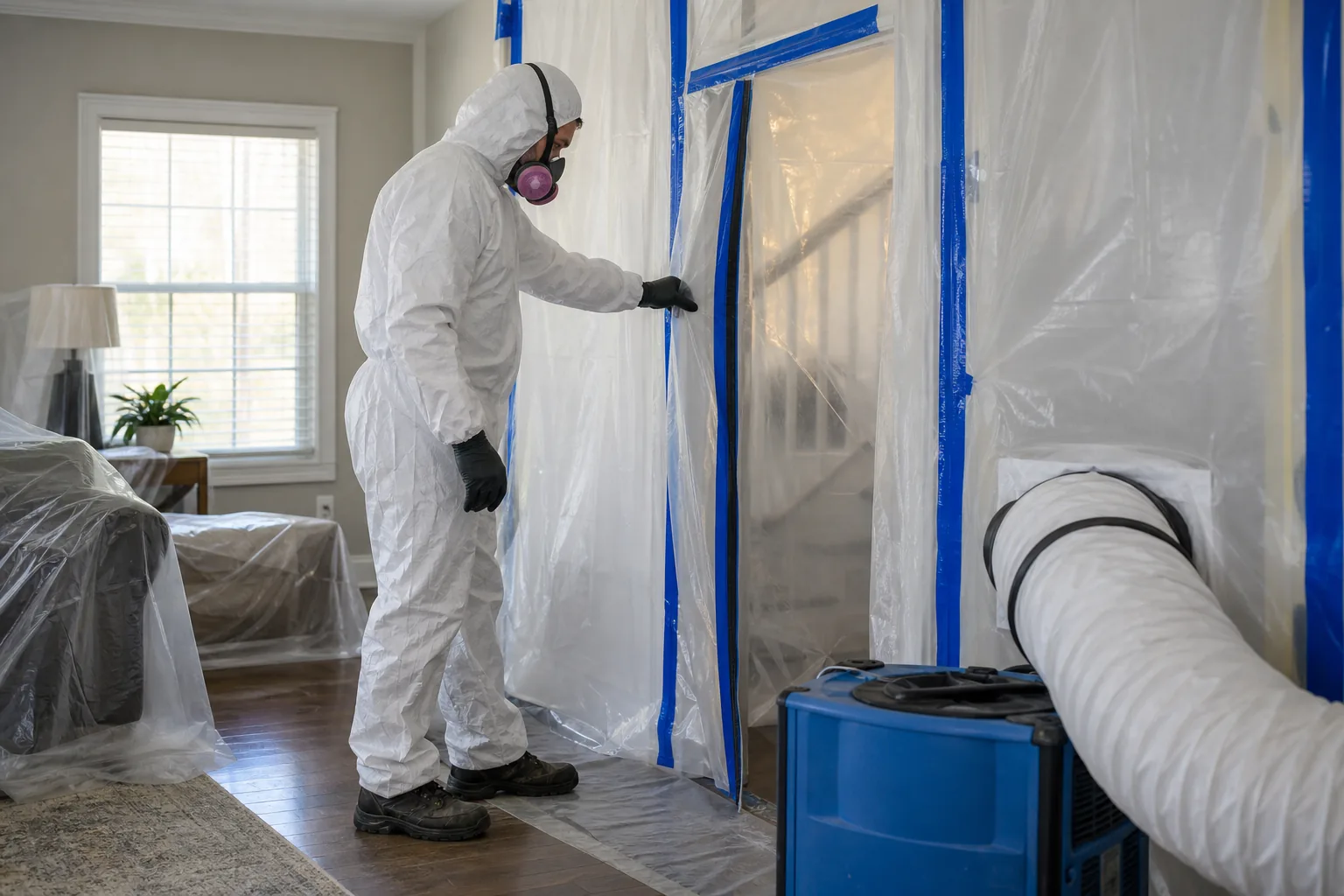
What credible remediation looks like
A credible scope fixes moisture, controls dust and particle movement, physically removes contaminated material that cannot be cleaned, dries the assembly, and defines completion. A fog, spray, or paint-only proposal should explain how it removes—not merely covers or kills—contamination.
Testing is not automatically required
If growth is visible, EPA says sampling is usually unnecessary. Test only when the answer will change a decision, and use a qualified professional who can explain sampling methods and interpretation.
Questions homeowners ask
Is every black mold Stachybotrys?
Should I move out immediately?
Sources and standards
Editorial guidance on this page is based on current public-health and contractor resources. A property-specific scope still requires an on-site assessment.