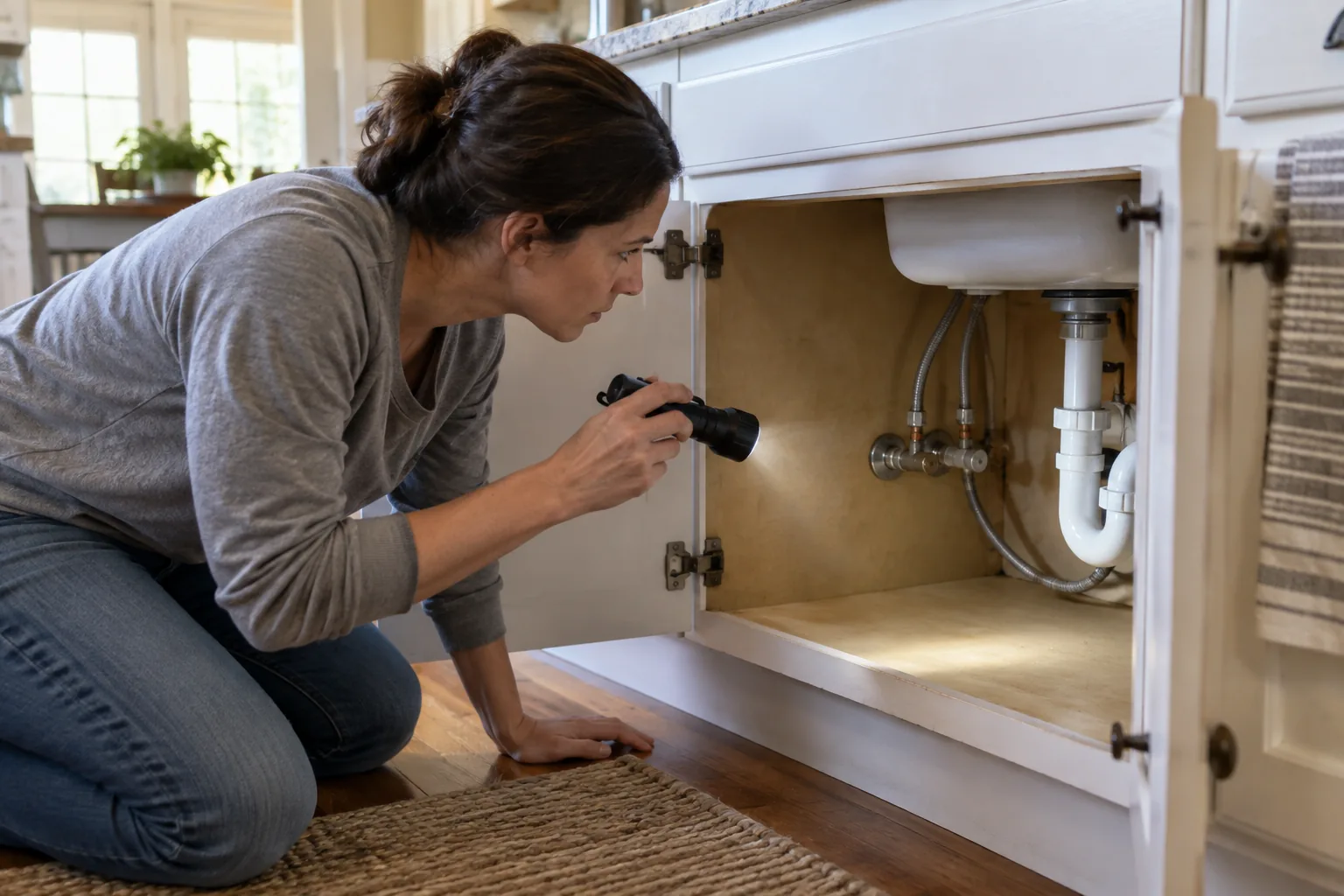
When suspected growth is near a return, inside an air handler, or on HVAC insulation, the system deserves a focused assessment before it moves particles through the building. EPA advises against operating a system known or suspected to be contaminated.
Inspect the system, not just the grille
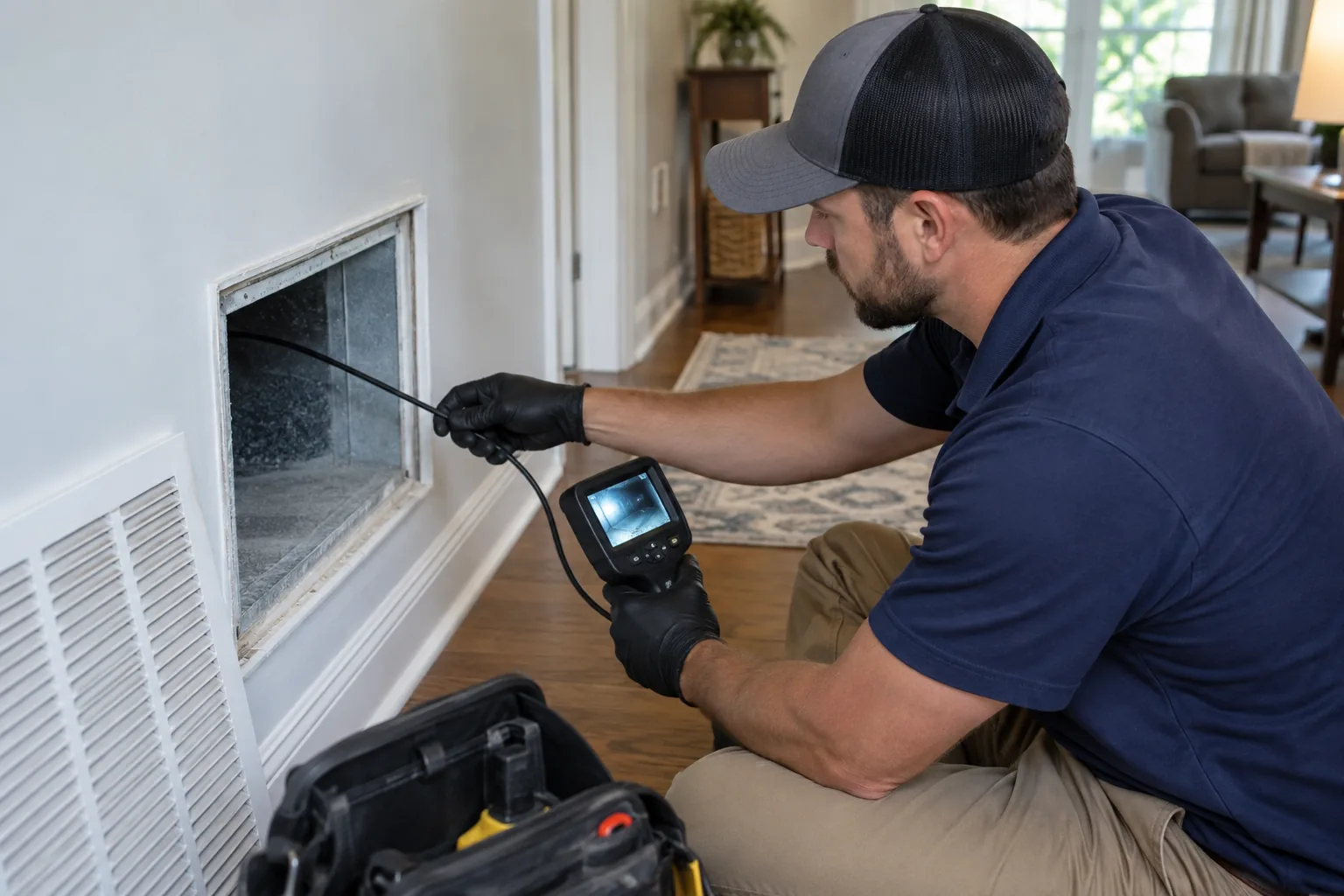
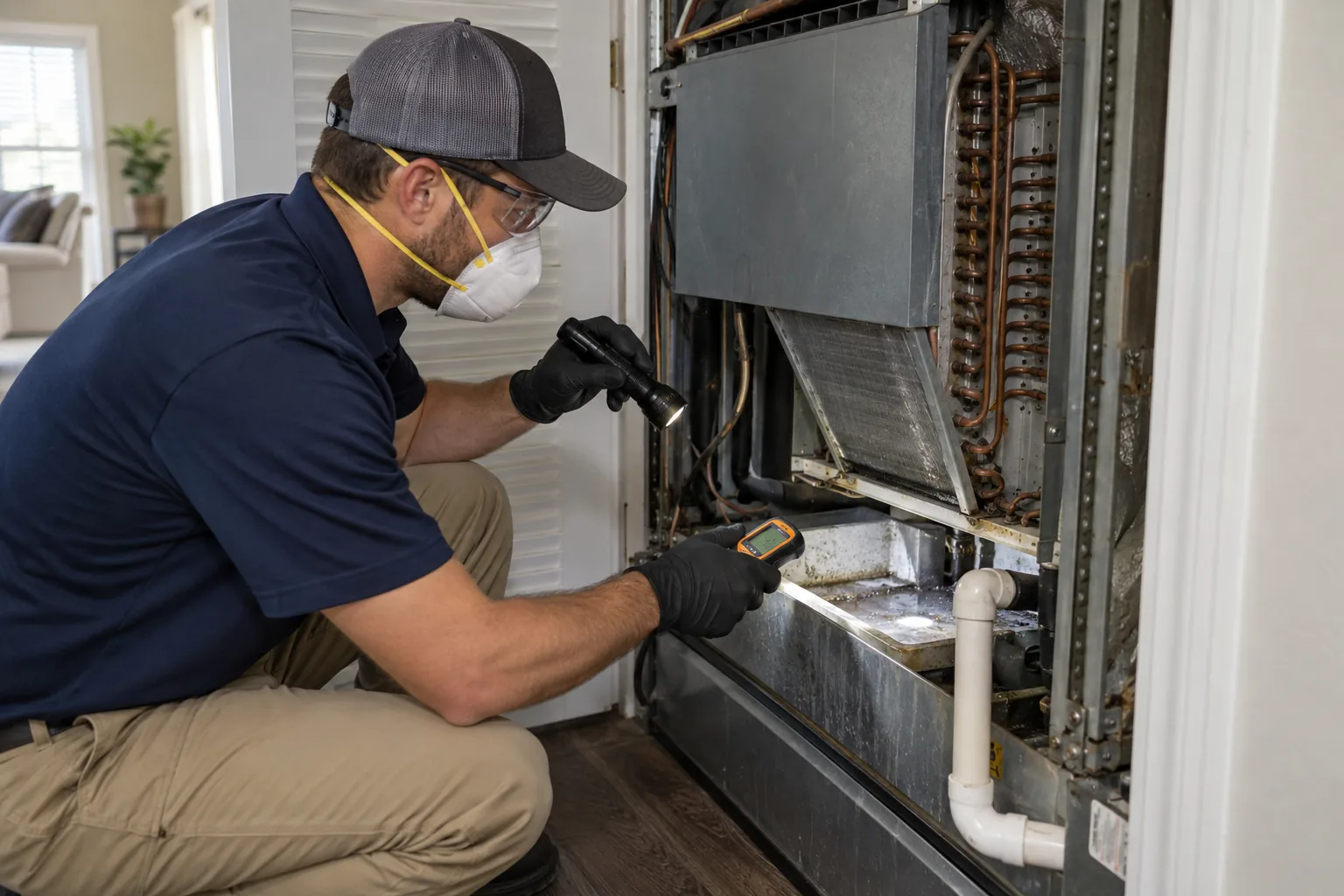
A useful assessment looks at filters, return and supply plenums, evaporator coil, drain pan and line, humidifier if present, accessible duct interiors, internal insulation, nearby leaks, and indoor humidity. Material on a register may be household dust, condensation-related residue, or microbial growth; a photo alone is rarely conclusive.
What cleaning can and cannot solve
Cleaning can remove contamination from appropriate accessible surfaces. It cannot repair a failed drain, prevent coil condensation, dry wet fiberglass, seal a building-air leak, or replace damaged porous insulation. Those items should appear separately in the scope.
Questions before authorizing duct work
- Where is confirmed or suspected growth located?
- What caused moisture there?
- Are ducts metal, flex, lined, or internally insulated?
- What components will be opened and cleaned?
- How will debris be captured instead of released indoors?
- Who will correct drainage, insulation, or mechanical defects?
Avoid broad promises about indoor air
No contractor can make a home sterile, and background mold spores exist indoors and outdoors. The goal is to remove indoor growth, correct abnormal moisture, and return the system to a clean, dry, maintainable condition.
Questions homeowners ask
Should all ducts be replaced if mold is suspected?
Can a UV light replace HVAC cleaning?
Sources and standards
Editorial guidance on this page is based on current public-health and contractor resources. A property-specific scope still requires an on-site assessment.