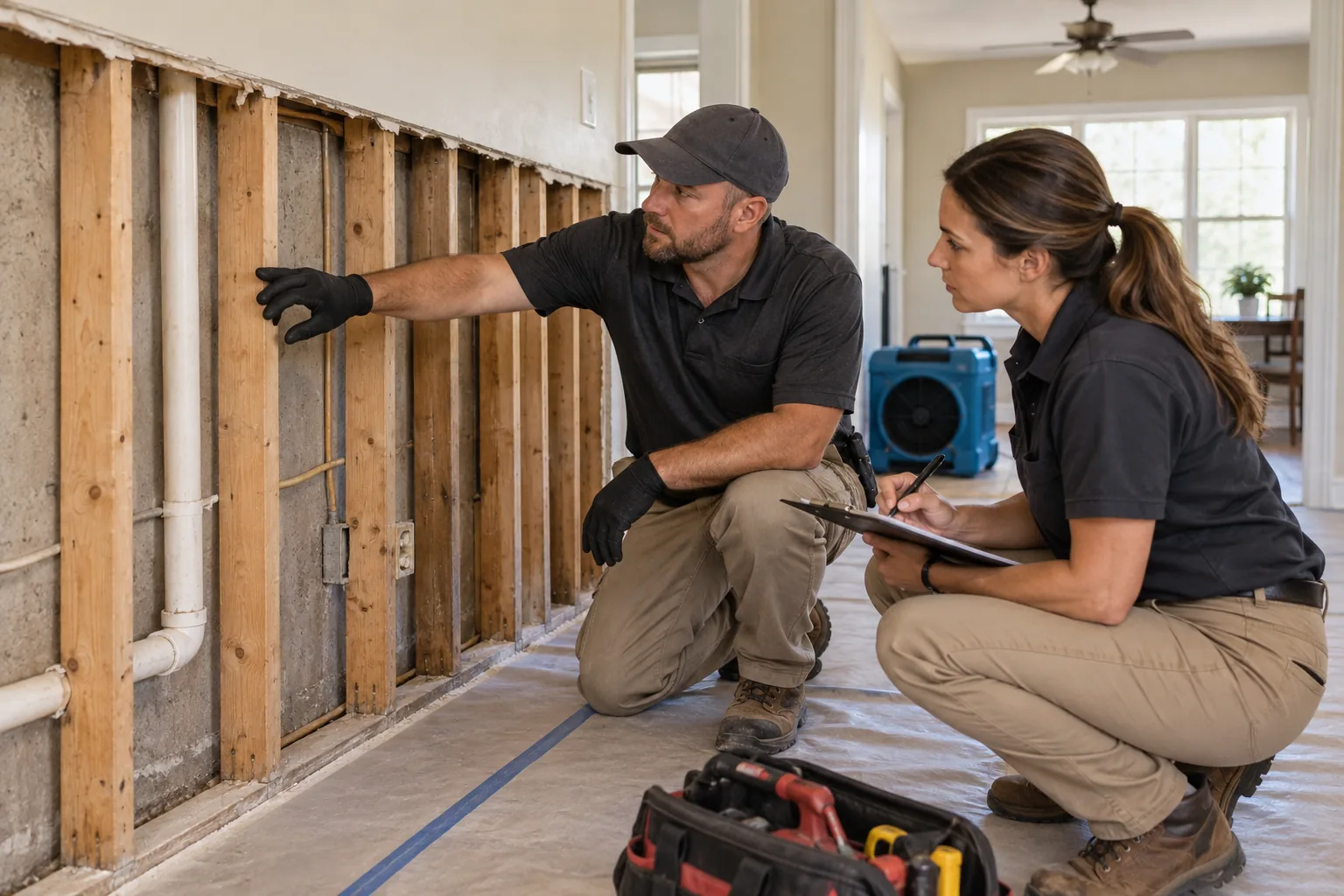
Mold remediation and repair are connected but distinct scopes. Remediation removes affected material and contamination; repair restores the building. Splitting the estimate makes it easier to understand what happens before and after clearance.
Build the repair scope from the open assembly
Once damaged finishes are removed, the team can inspect framing, sheathing, fasteners, wiring, plumbing, and insulation. Do not assume every stained board requires replacement, but do not let a cosmetic coating conceal decay or unresolved wetness.
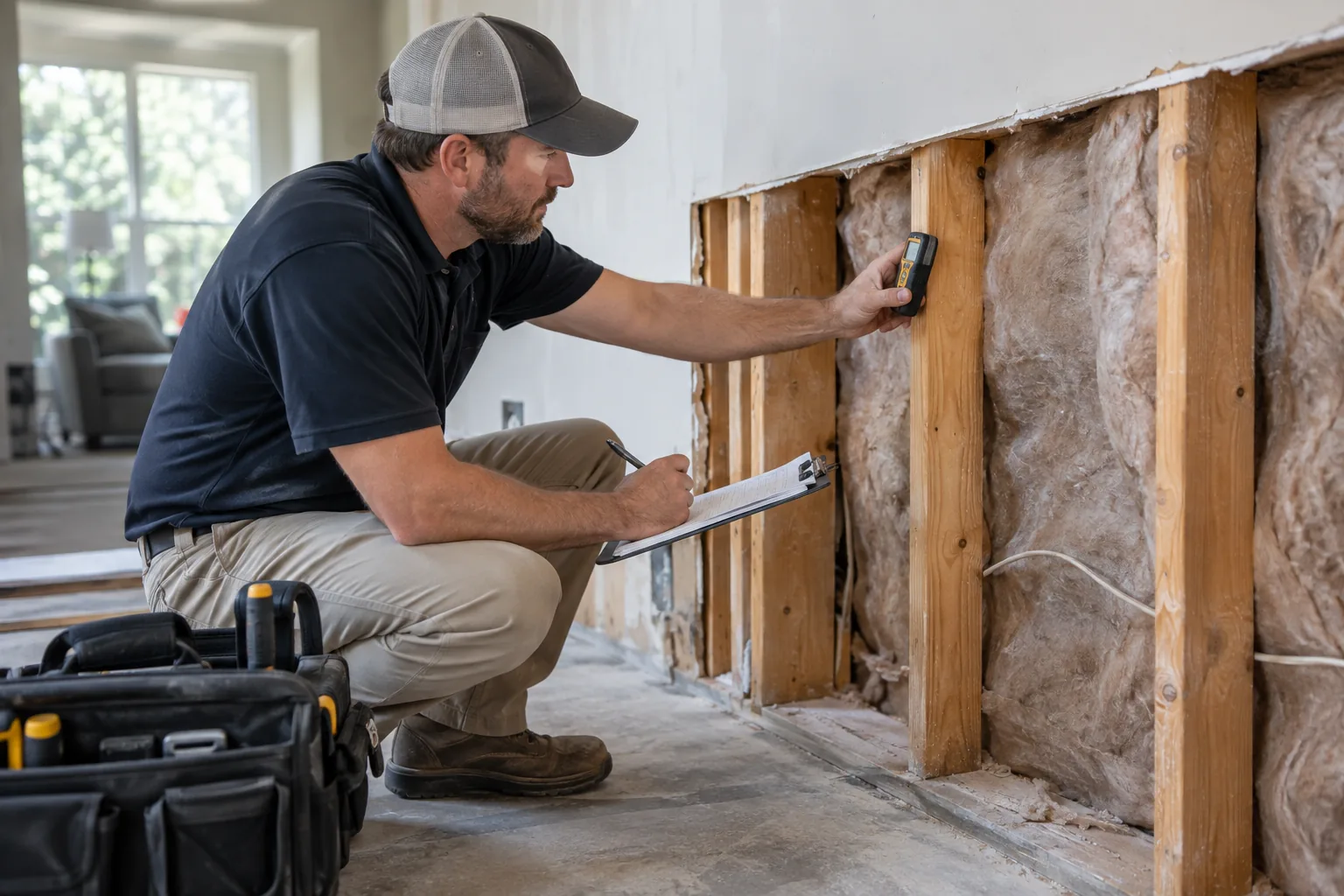
Sequence prevents rework
- Stop the leak or humidity source.
- Document and remediate affected material.
- Dry and verify the assembly.
- Complete structural, plumbing, electrical, roofing, or HVAC repairs.
- Install insulation and finishes.
- Recheck the area after normal operation resumes.
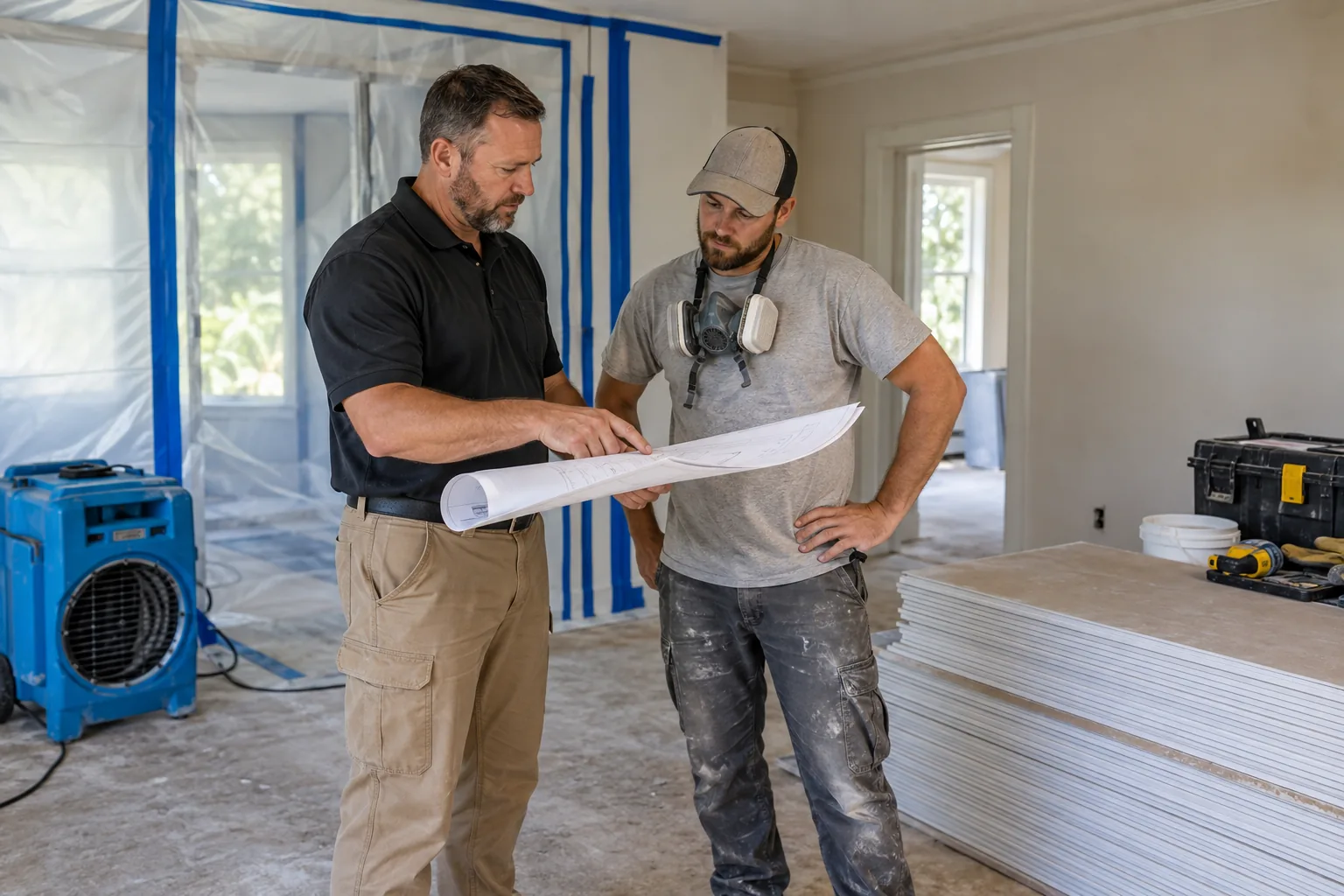
Common exclusions that change the price
Ask whether the proposal excludes permits, engineering, asbestos or lead evaluation, moving contents, plumbing or roof repair, electrical work, finish matching, painting entire rooms, temporary housing, or insurance documentation. These exclusions can be legitimate; they should not be surprises.
Contractor-license and permit questions
Tennessee’s licensing rules depend on project value and trade. Confirm requirements with the Tennessee Board for Licensing Contractors and the local authority having jurisdiction rather than relying on a salesperson’s verbal assurance.
Questions homeowners ask
Can drywall be cleaned after mold growth?
Who should repair the leak?
Sources and standards
Editorial guidance on this page is based on current public-health and contractor resources. A property-specific scope still requires an on-site assessment.