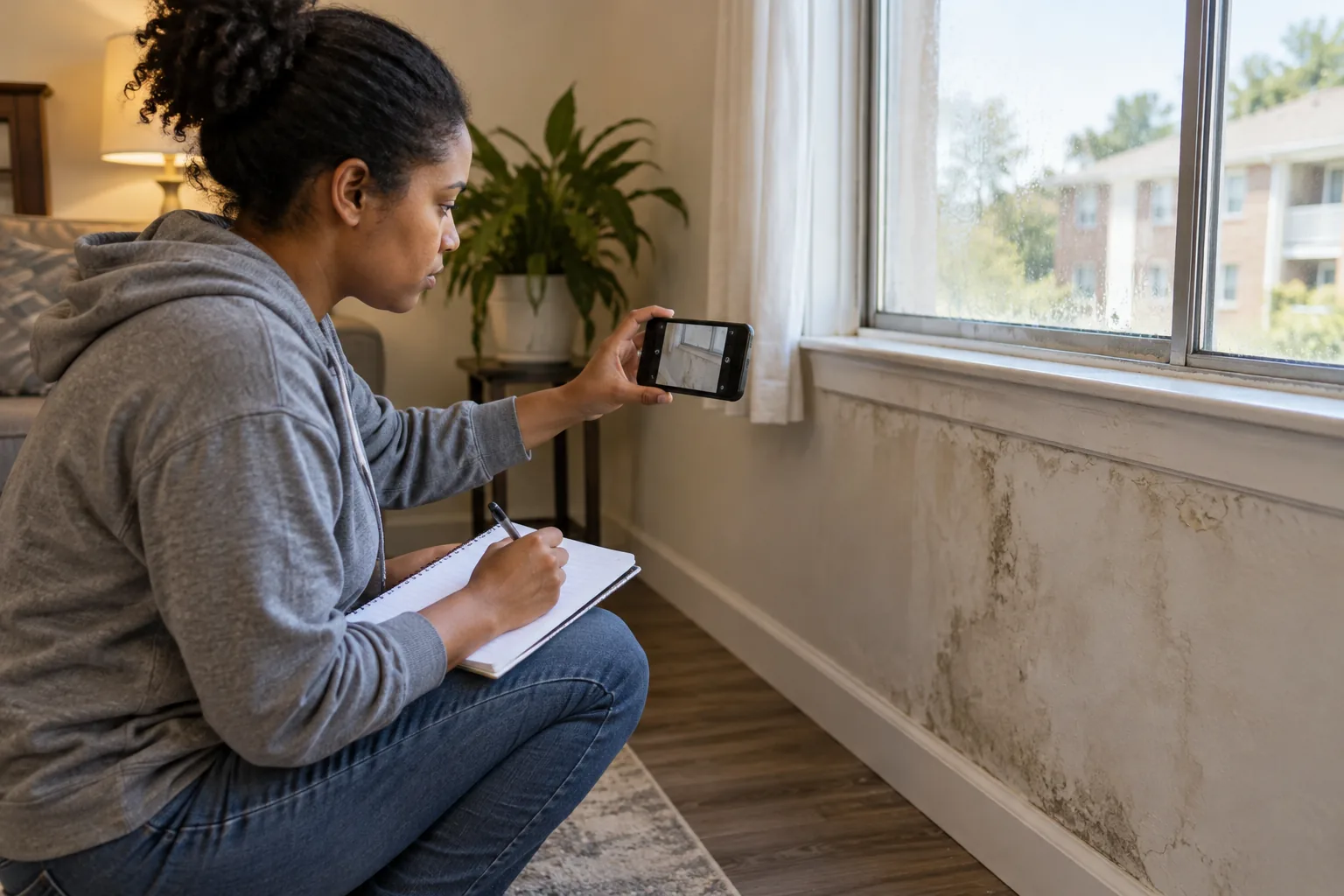
Create a record before cleaning changes the evidence
Photograph wide room views and close details, note dates, odors, leaks, humidity or condensation, damaged belongings, and when symptoms occur without claiming a diagnosis. Save maintenance requests, emails, texts, and responses.
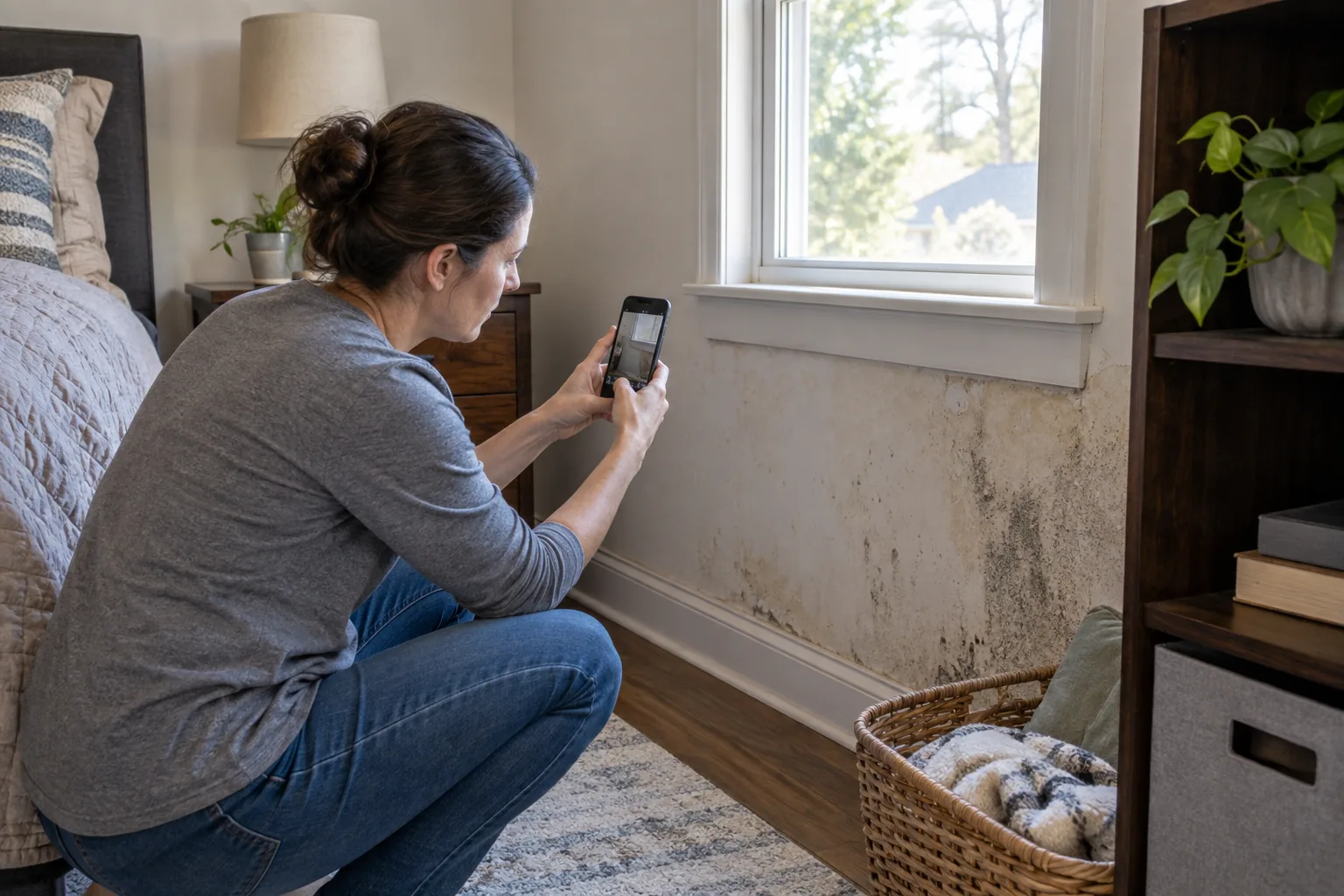
Report the cause, not only the stain
A useful notice identifies the active leak, soft or wet material, recurring condensation, failed ventilation, or odor location. Ask for the source to be corrected and the affected material evaluated—not simply painted.

Protect health without making medical claims
CDC says damp and moldy environments may cause health effects in some people and none in others. If you have symptoms, asthma, chronic lung disease, allergies, or immune suppression, contact a healthcare professional and avoid participating in cleanup.
When the response stalls
Review the lease, keep communications factual, allow lawful access for inspection and repairs, and contact a qualified Tennessee tenant-law resource or local authority for advice specific to your situation. This site does not provide legal advice.
Moving belongings
Do not carry loose contaminated material through clean areas. Photograph damaged items and ask the insurer or landlord about documentation before disposal. Washable and valuable items may need specialized cleaning rather than automatic disposal.
Sources and standards
Editorial guidance on this page is based on current public-health and contractor resources. A property-specific scope still requires an on-site assessment.