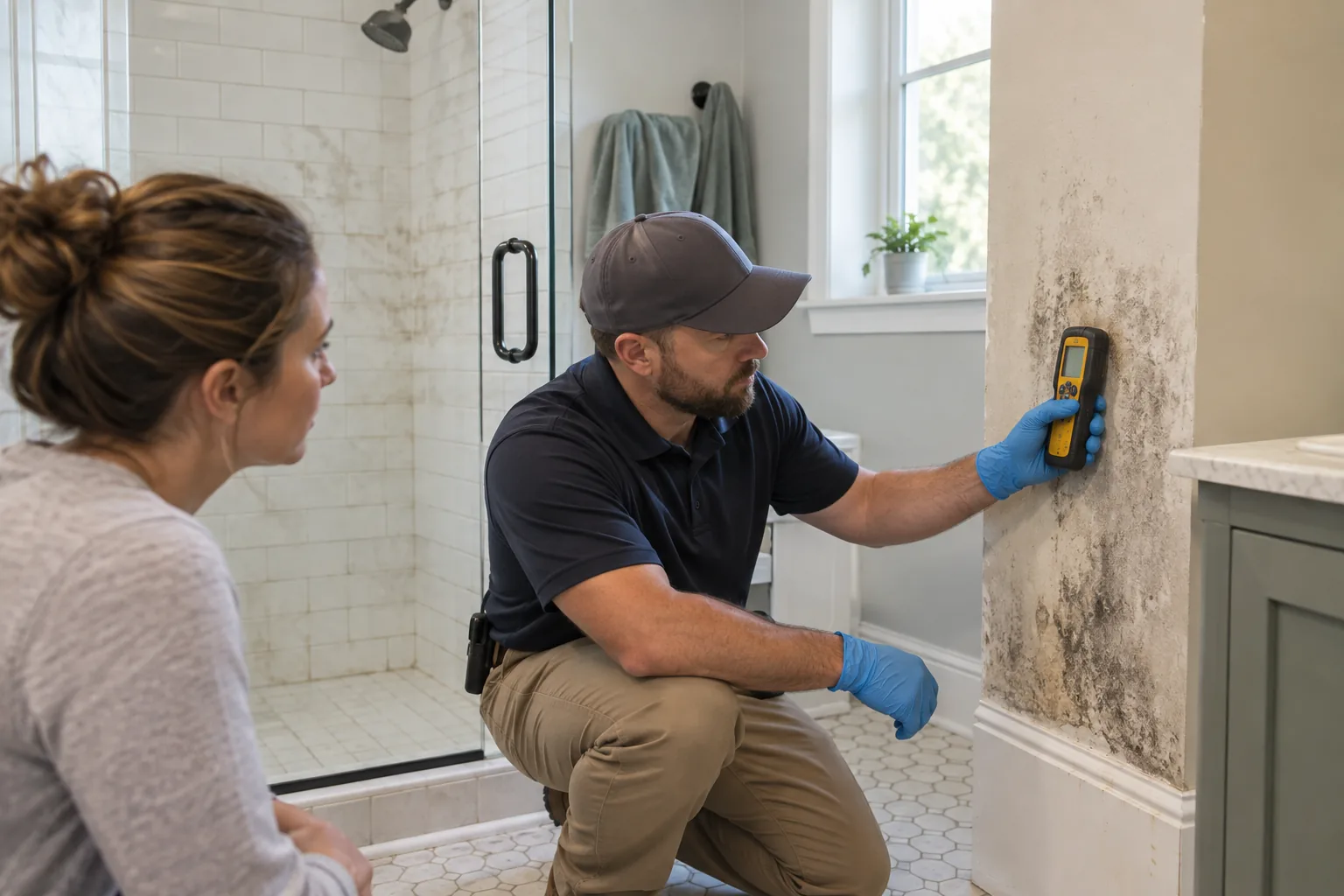
Start with where it is growing
In a Jackson, Tennessee property, a wipeable film on a shower surface is different from discoloration on soft drywall, carpet backing, insulation, or structural wood. Inspect the material, how long it stayed damp, and what is happening behind it.
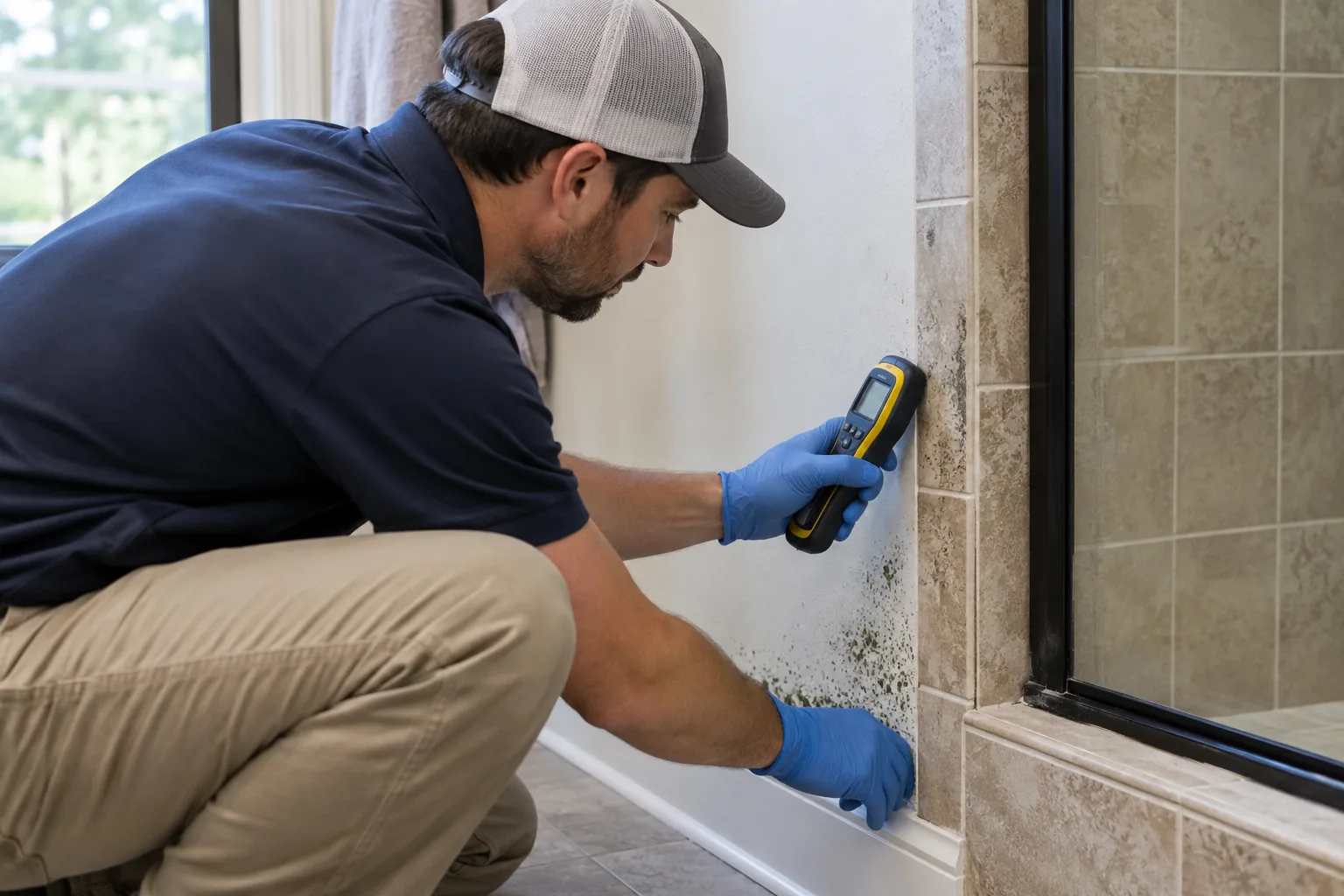
Questions a photo cannot answer
- Is the material wet now?
- Is there a plumbing, roof, drainage, or condensation source?
- Does the odor or staining extend into a cavity?
- Is the surface structurally sound?
- Will cleaning disturb a larger hidden area?
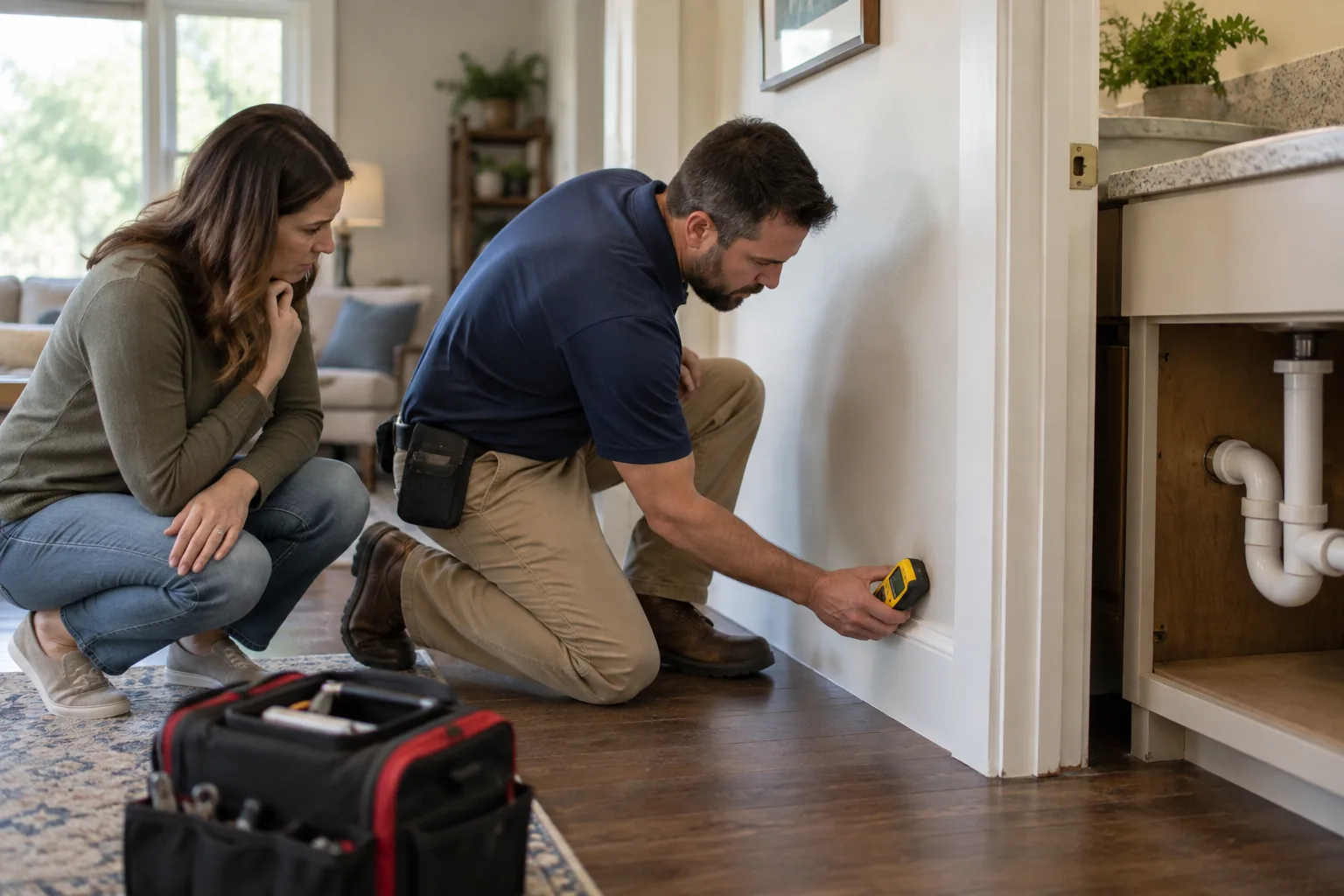
Do not identify risk by color
White, green, gray, brown, and black appearances overlap among organisms and nonbiological stains. If species identification would change a medical, legal, or remediation decision, use a qualified sampling professional rather than a visual guess.
Use the same practical endpoint
Correct abnormal moisture, remove indoor growth, dry the material, and confirm that it does not return. The building should not rely on a label—mold or mildew—to justify leaving wet material in place.
Sources and standards
Editorial guidance on this page is based on current public-health and contractor resources. A property-specific scope still requires an on-site assessment.