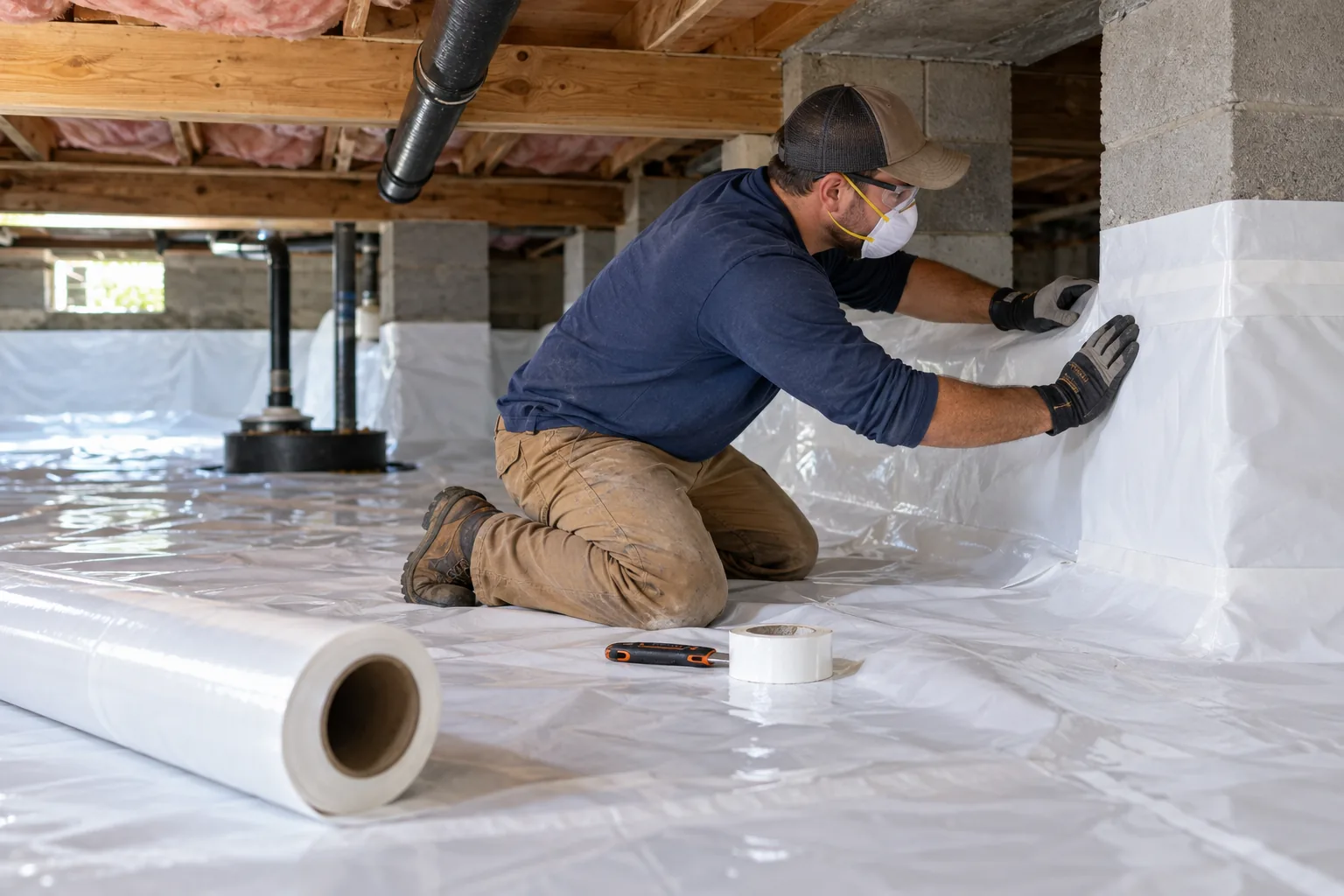
Ask exactly what is being encapsulated and why. A crawl-space liner manages ground moisture and air exchange; a coating may protect or seal a prepared surface. Neither should be used to hide active growth, wet material, or an unresolved leak.
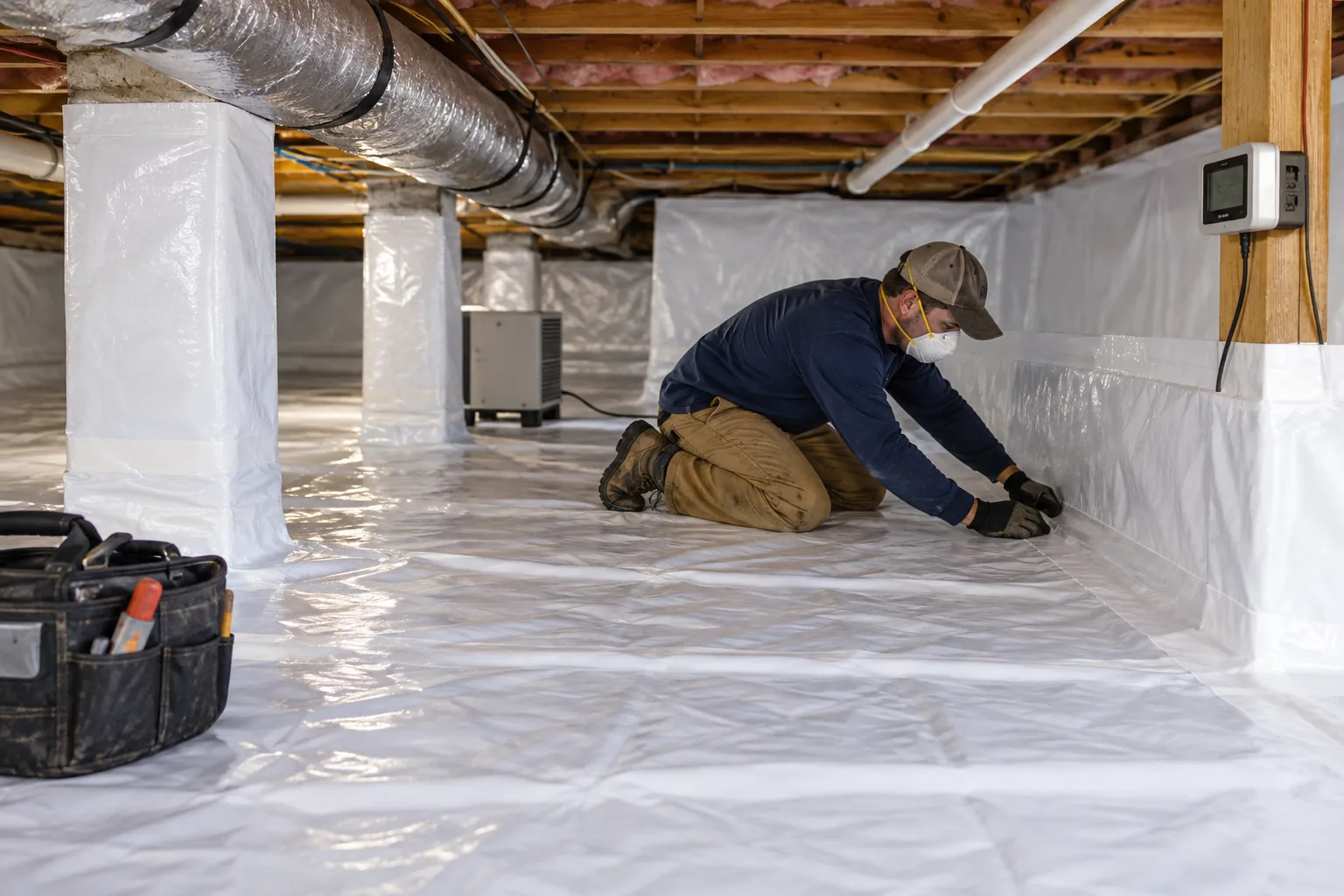
Crawl-space encapsulation
A complete system may address drainage, ground vapor, walls, piers, seams, penetrations, access doors, air leakage, insulation, and humidity control. The liner thickness alone does not tell you whether the system will manage bulk water or remain serviceable.
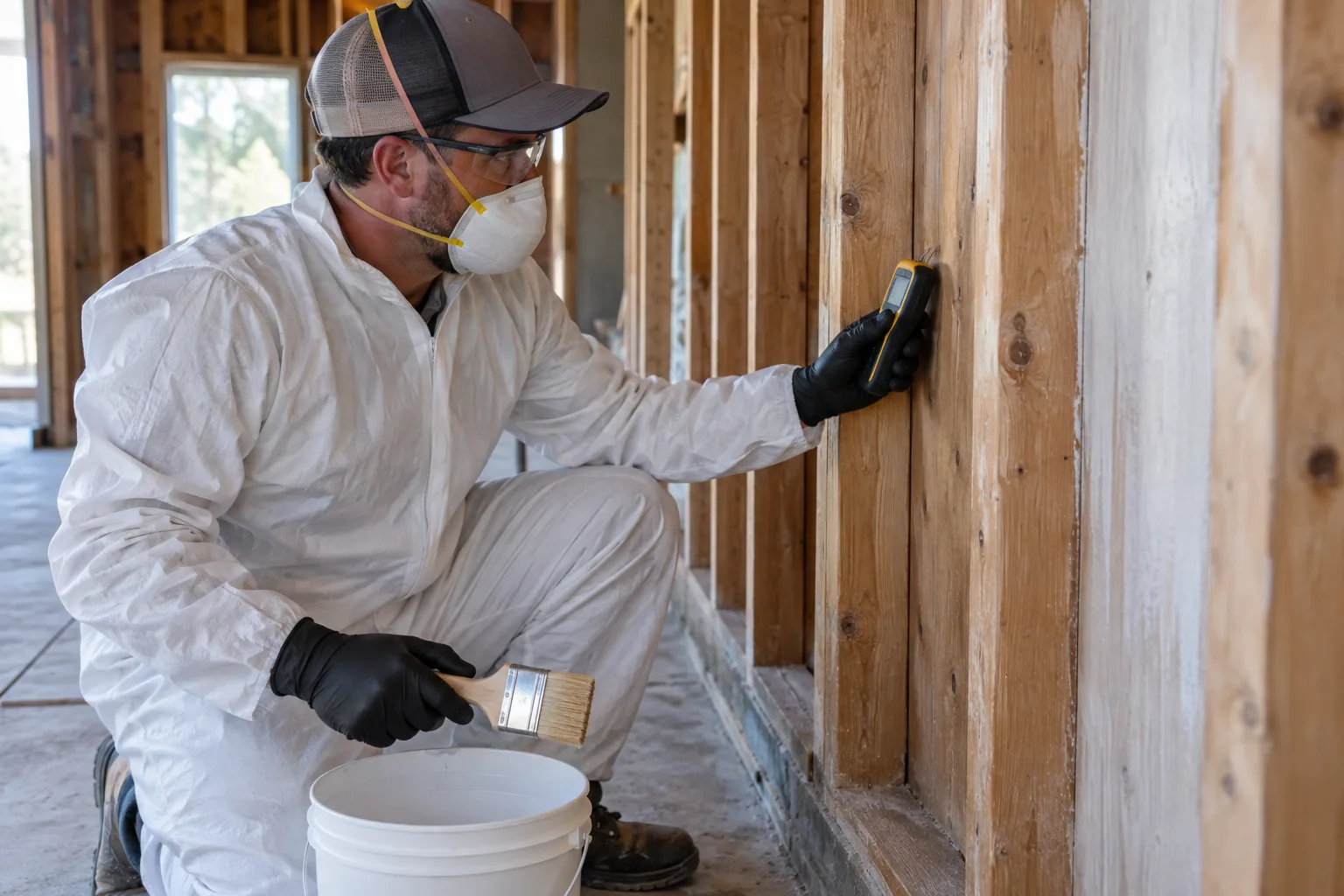
Surface encapsulant coatings
A coating should be specified for a compatible, properly cleaned, dry substrate. Ask for surface-preparation requirements, coverage rate, curing conditions, safety data, warranty terms, and whether future inspection remains possible.
Red flags in an encapsulation-only pitch
- No measured moisture or humidity data.
- No explanation of drainage or leak correction.
- Application directly over visible debris or growth.
- No plan for drying before enclosure.
- Claims that one product permanently solves every mold problem.
A better decision rule
Choose encapsulation because the building needs ongoing moisture control or surface protection after remediation—not because a sealed surface looks cleaner in an after photo.
Questions homeowners ask
Does encapsulation kill mold?
Does every crawl space need a dehumidifier after encapsulation?
Sources and standards
Editorial guidance on this page is based on current public-health and contractor resources. A property-specific scope still requires an on-site assessment.