Before entering
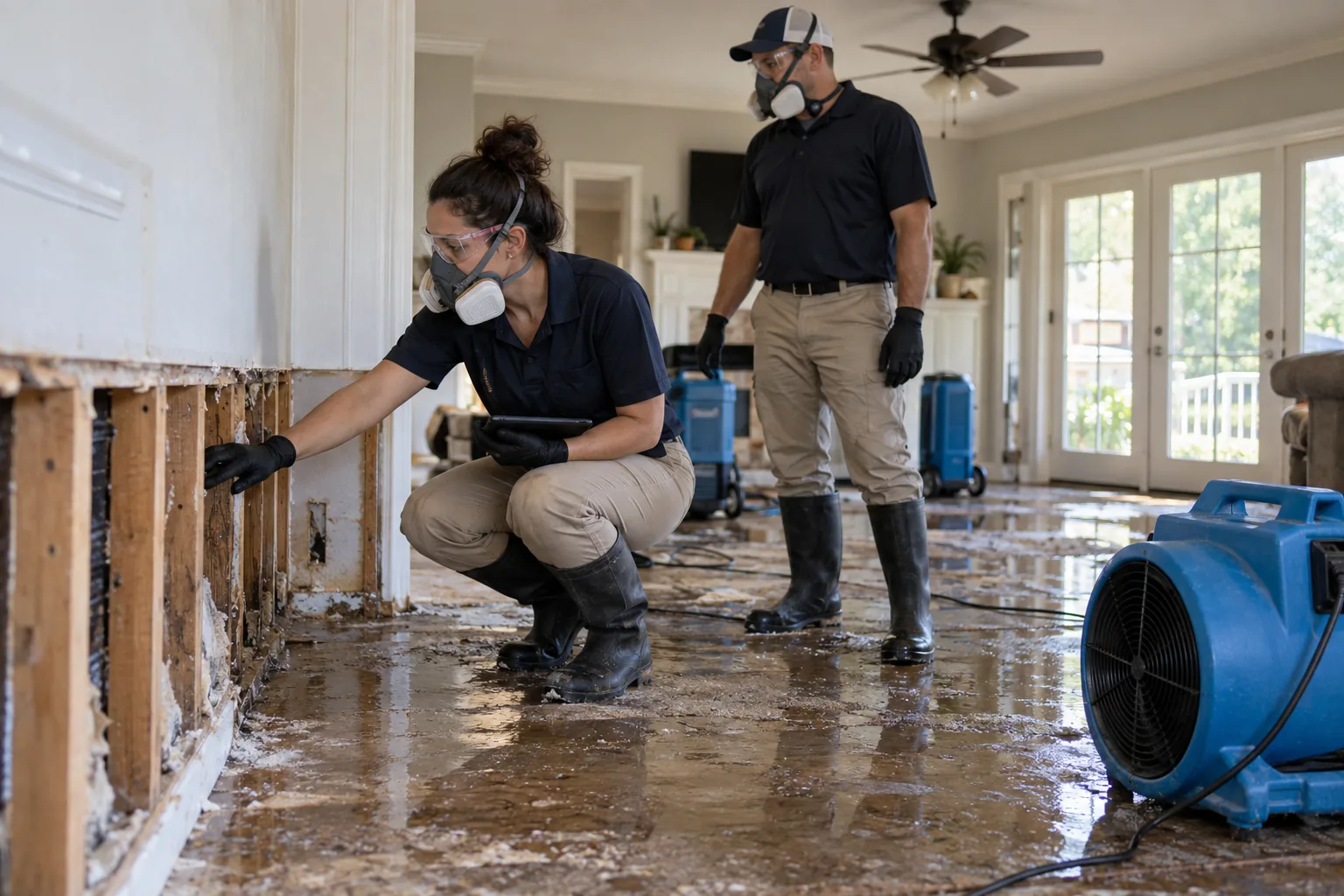
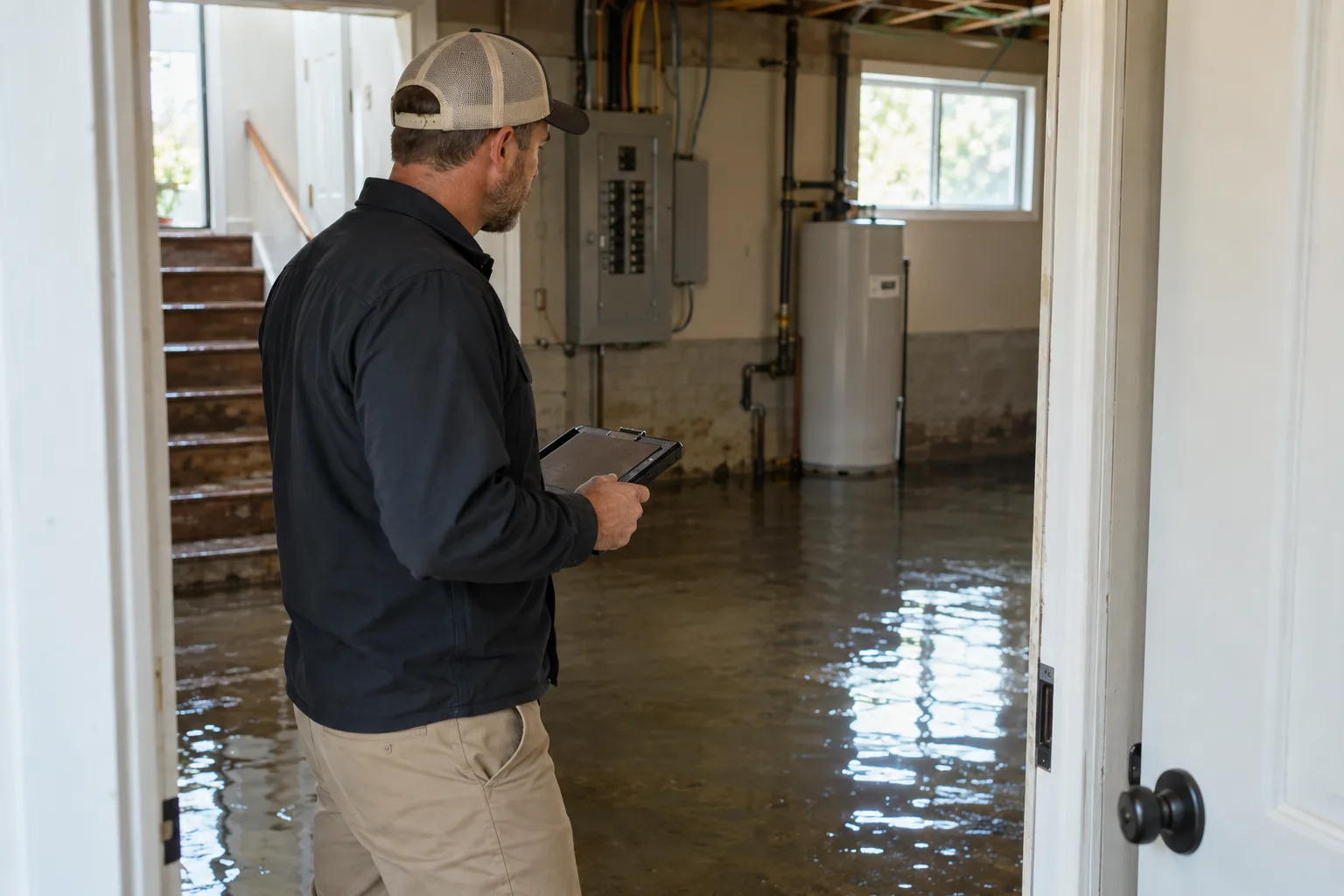
After flooding at a Jackson, Tennessee property, do not enter until fire, utility, and structural hazards are addressed. Portable generators belong outdoors and away from openings. Floodwater can contain sewage, chemicals, and sharp debris; ordinary mold-cleanup advice is not enough for contaminated water.
Document before disposal
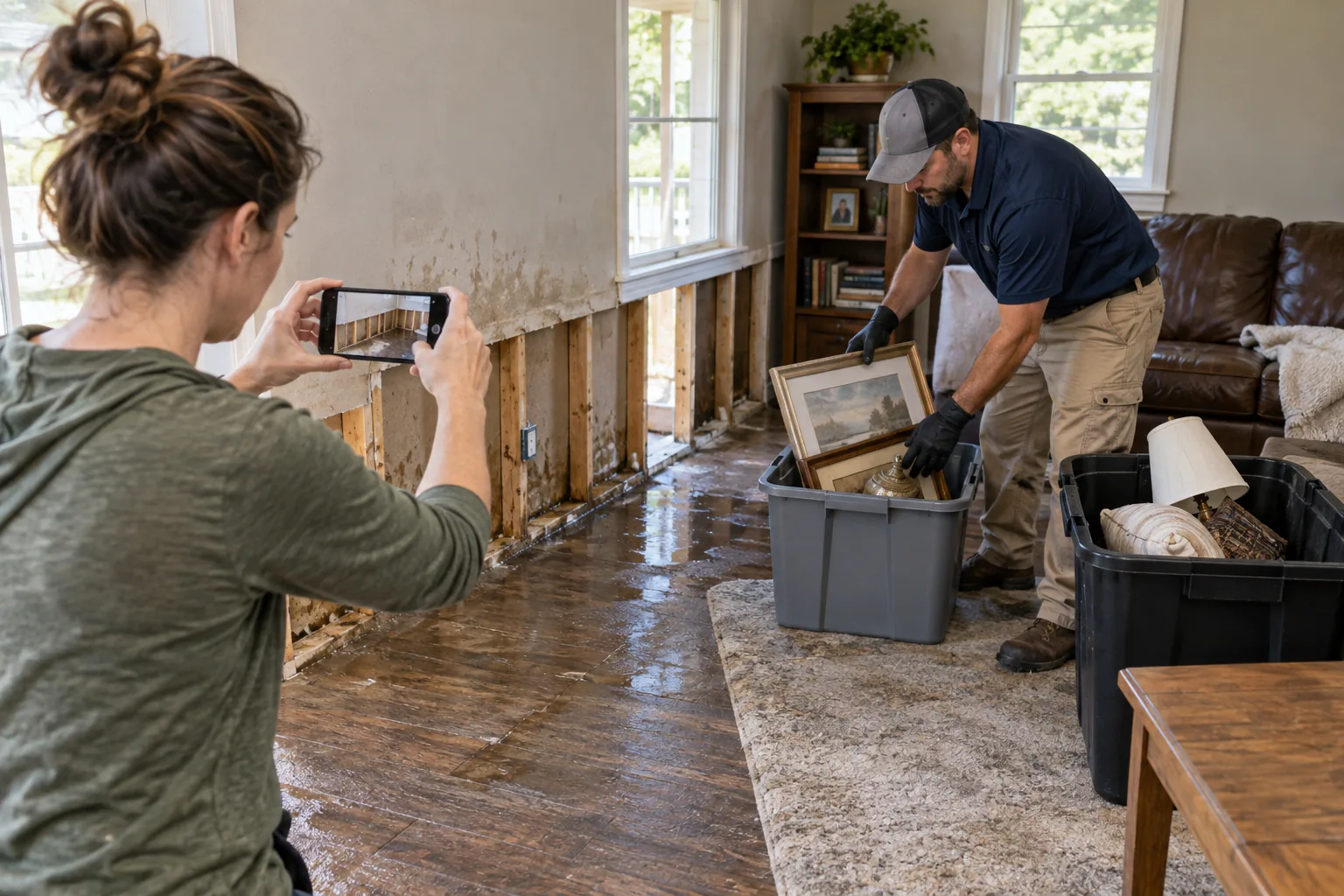
Contact the insurer and photograph rooms, water lines, damaged materials, contents, equipment, and the apparent source. Ask what must be retained for inspection and how emergency work should be invoiced.
Drying is a building-system task
Remove standing water, expose wet cavities when qualified to do so, separate salvageable from unsalvageable material, and measure moisture—not just surface appearance. CDC and EPA guidance emphasizes drying wet materials within 24–48 hours when possible.
Do not save the wrong things
Nonporous items can often be cleaned. Porous materials such as ceiling tile, carpet pad, paper-faced drywall, and insulation may be difficult or impossible to clean after established contamination. Valuable or sentimental items deserve advice from a conservation or contents-restoration specialist.
Reoccupy based on conditions
Before normal occupancy, the source should be corrected, wet materials dried or removed, visible growth and moldy odor absent, and the building safe to operate. People with asthma, COPD, immune suppression, or other health concerns should obtain medical advice about exposure and reentry.
Sources and standards
Editorial guidance on this page is based on current public-health and contractor resources. A property-specific scope still requires an on-site assessment.