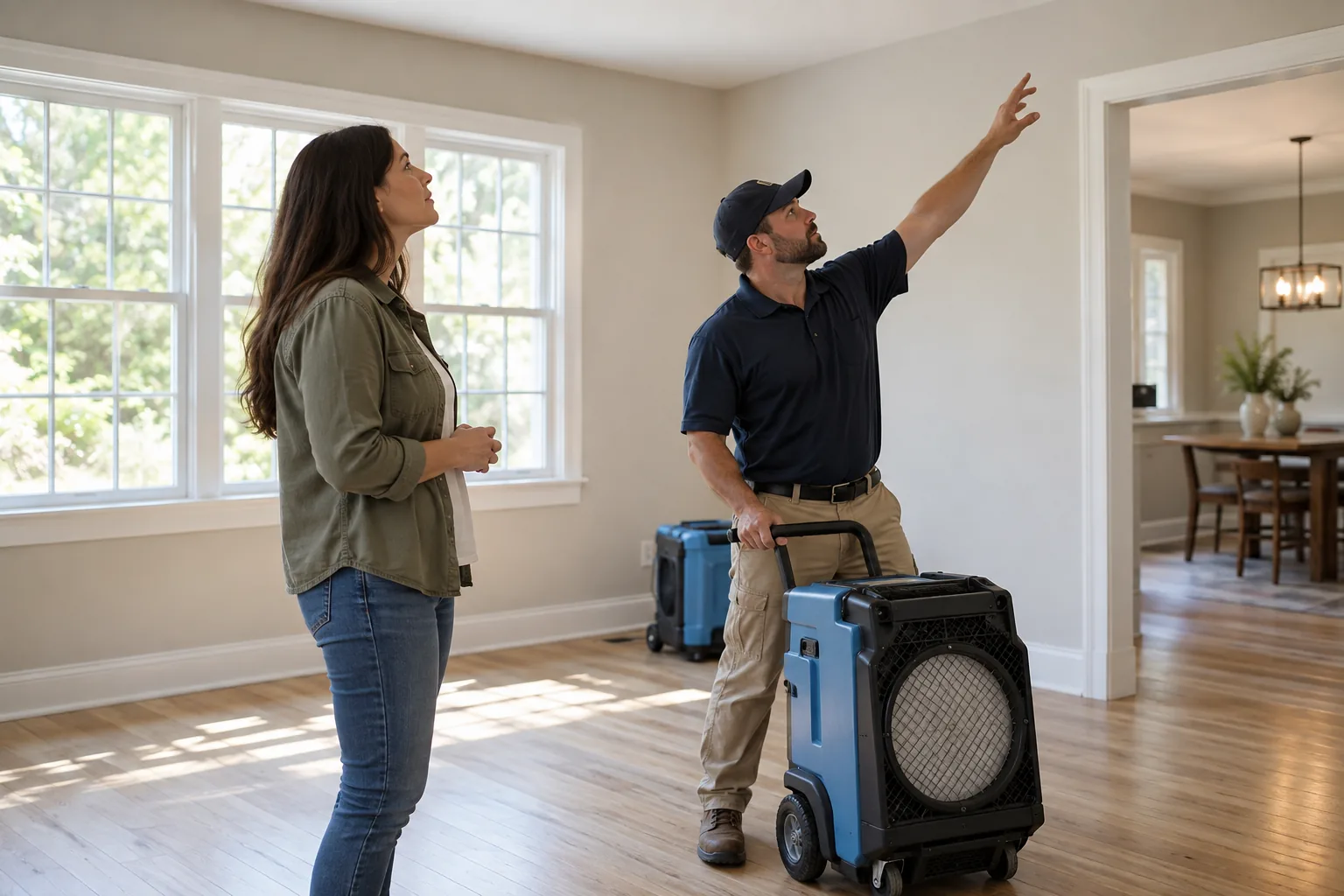
For Jackson, Tennessee homes and businesses, indoor-air improvement starts with the affected building materials—not an air-quality promise made over the phone.
Use the right control in the right order
- Stop water entry and abnormal humidity.
- Remove damaged material and clean settled debris.
- Dry the building assembly.
- Restore HVAC filtration and outdoor ventilation appropriately.
- Monitor conditions under normal occupancy.
HEPA filtration is a tool, not a diagnosis
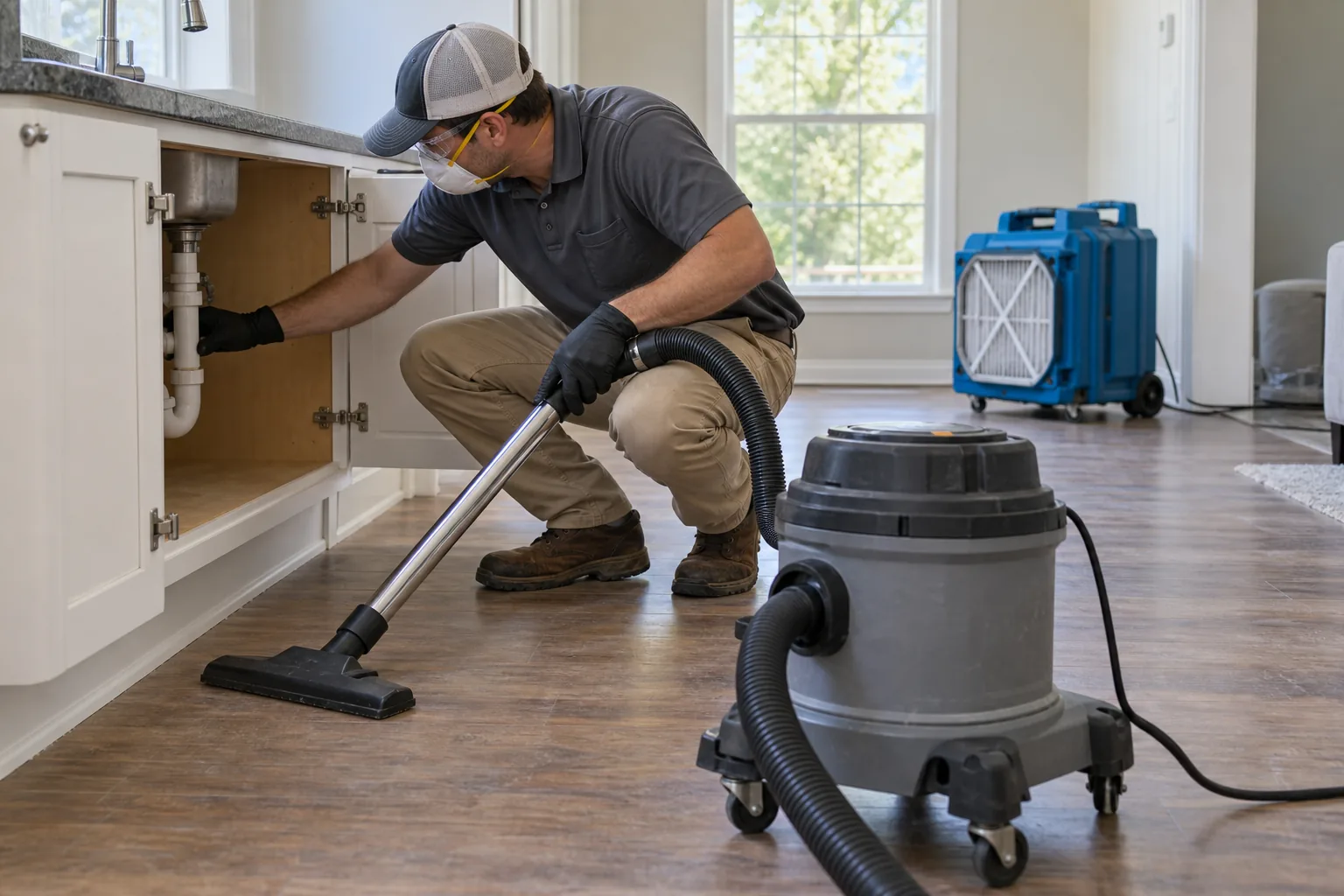
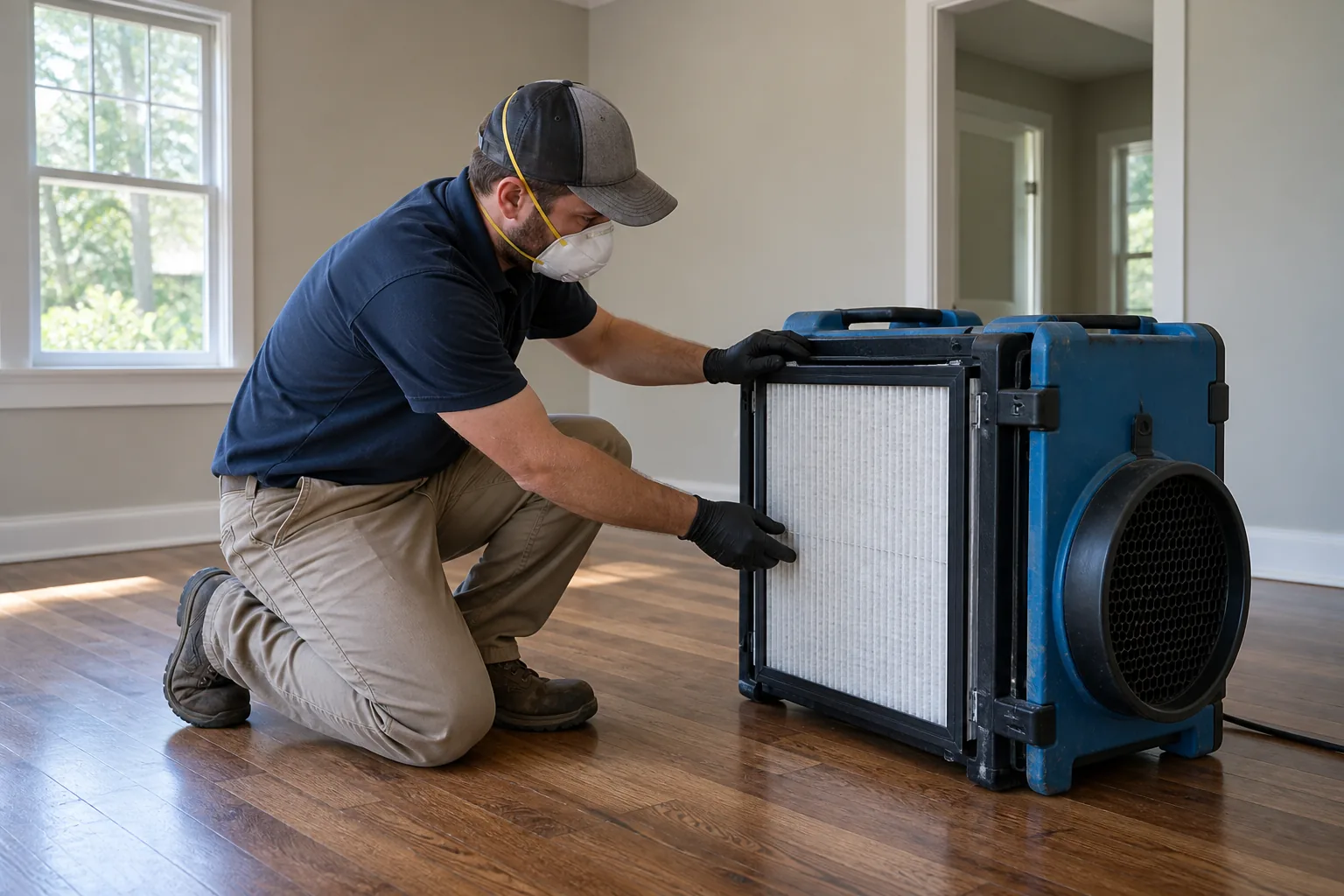
Air scrubbers and HEPA vacuums can capture fine particles during controlled cleanup. A portable air cleaner may reduce airborne particles in a room, but it does not remove growth inside a wall or solve the moisture source.
Judge improvement without promising sterile air
Look for corrected moisture, clean surfaces, absence of moldy odor, normal room use without recurrence, and filters or equipment maintained according to their instructions. Every occupied building contains some outdoor and indoor particles; zero spores is not a realistic endpoint.
When testing may help
Testing can be useful when an independent protocol defined it in advance or when a specific dispute or health-related decision requires professional interpretation. Routine air sampling is not a substitute for inspection.
Sources and standards
Editorial guidance on this page is based on current public-health and contractor resources. A property-specific scope still requires an on-site assessment.