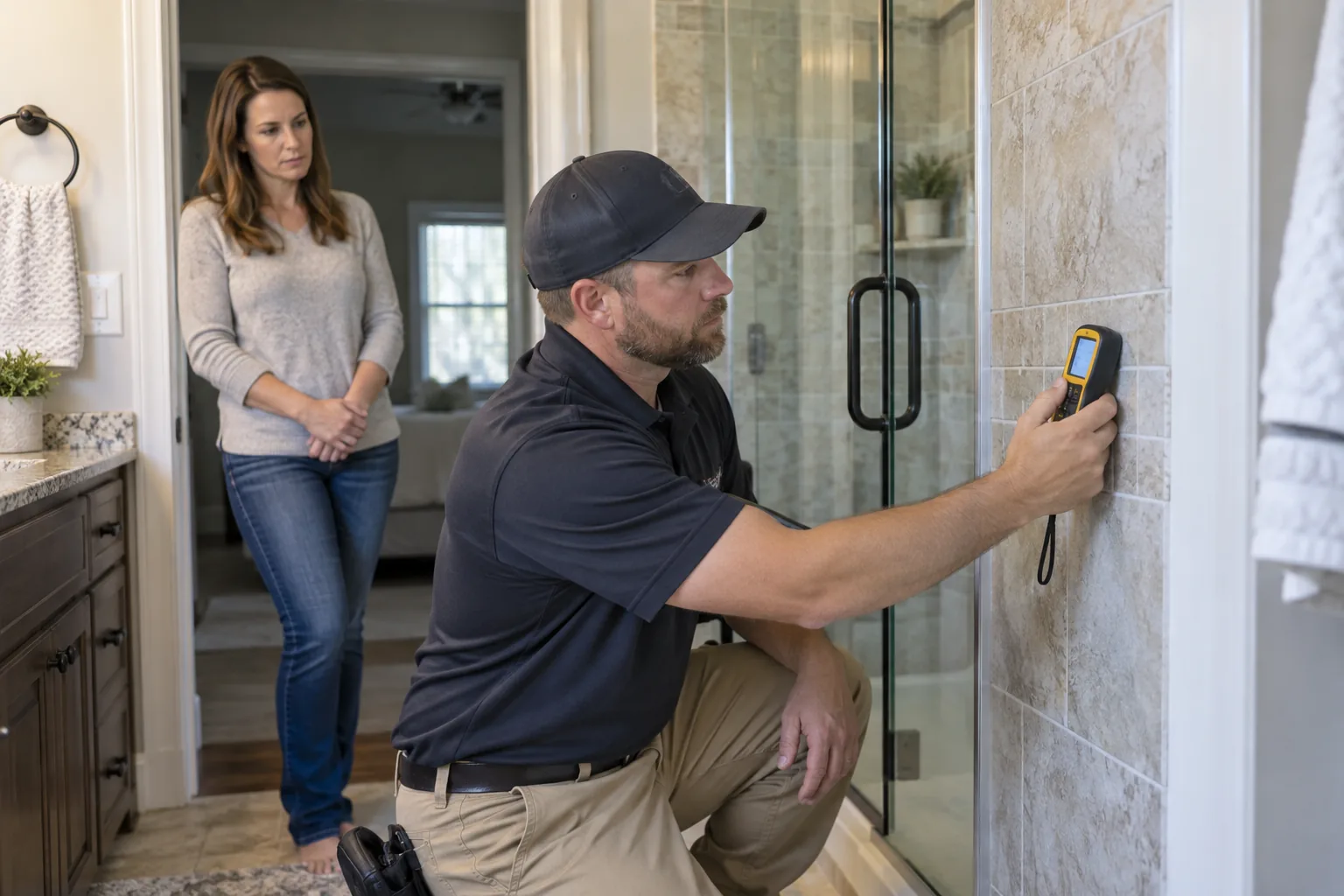
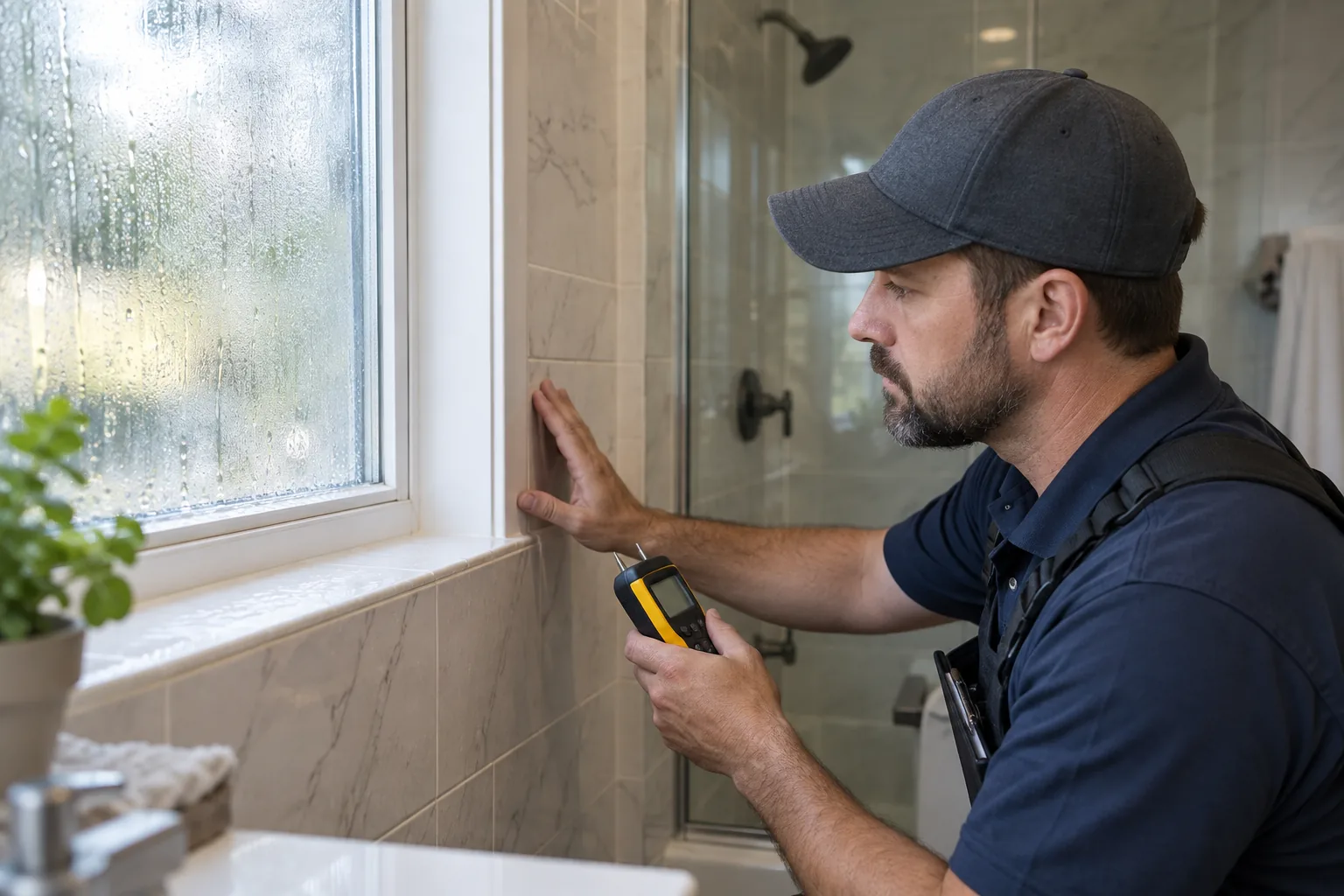
Start by deciding whether the surface gets wet from room humidity, a plumbing leak, or water passing through failed grout, caulk, or an enclosure. Cleaning without that distinction explains why many bathroom stains return.
Check the moisture pattern
Broad ceiling spotting after showers points toward humidity and exhaust. Soft drywall, a localized stain, peeling paint, loose tile, or damage below a fixture can point toward leakage. Inspect the room above and behind plumbing when the pattern does not match surface condensation.
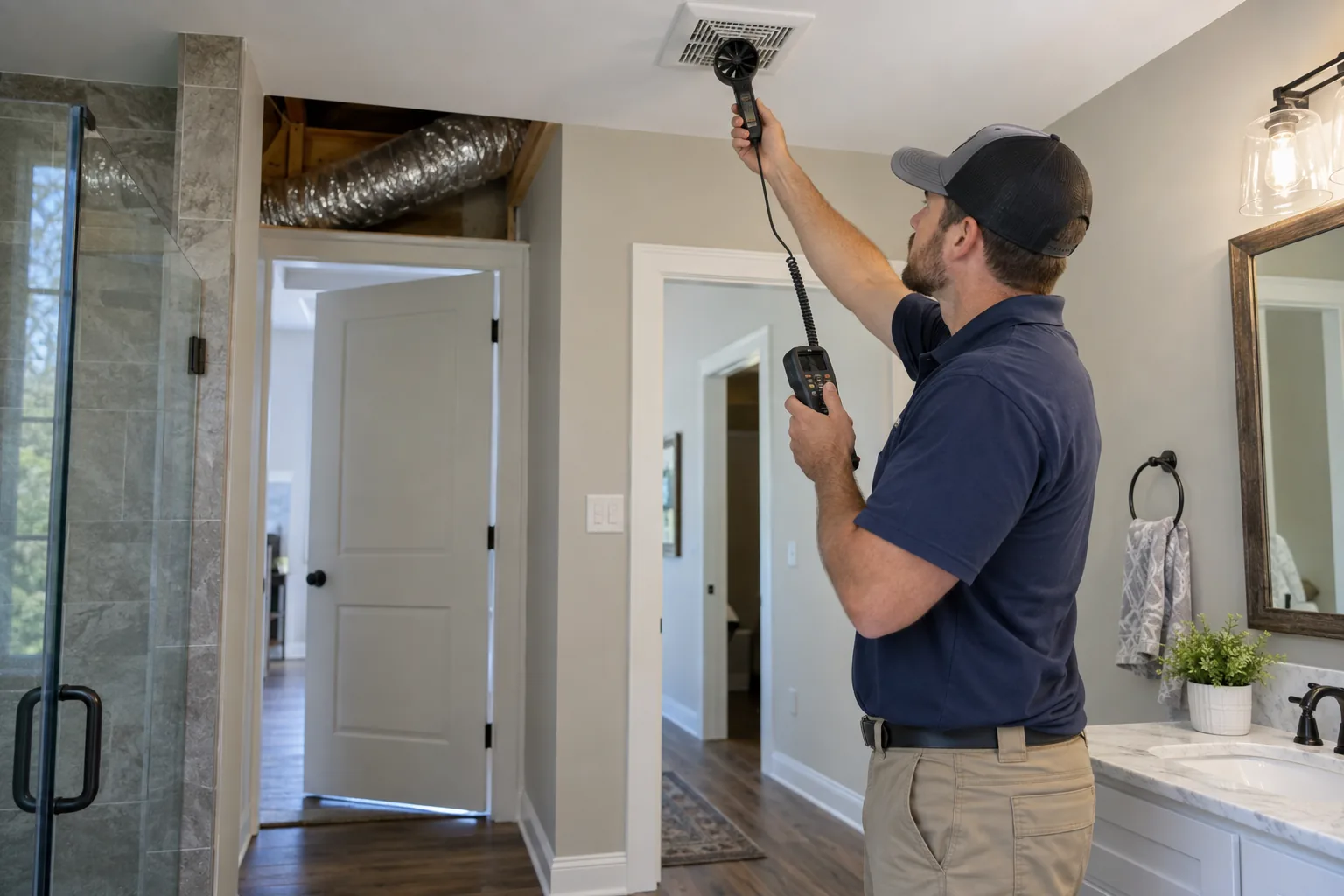
Make the exhaust fan prove its value
Confirm that the fan operates, moves air, and terminates outdoors. Run it during bathing and long enough afterward to clear moisture. A fan that is noisy, undersized, clogged, or vented into an attic may not solve the problem.
Cleanable versus replaceable material
Hard tile and other nonporous surfaces can often be cleaned after the moisture source is corrected. Water-damaged drywall, paper facing, insulation, swollen trim, or deteriorated backing may require removal. Do not caulk or paint over active growth.
When to bring in help
Call when the area extends beyond a small surface patch, the wall or floor is soft, water is hidden, odor persists, growth returns quickly, or demolition could expose a larger cavity.
Questions homeowners ask
Why does mold return on bathroom caulk?
Can mold-resistant paint fix the ceiling?
Sources and standards
Editorial guidance on this page is based on current public-health and contractor resources. A property-specific scope still requires an on-site assessment.