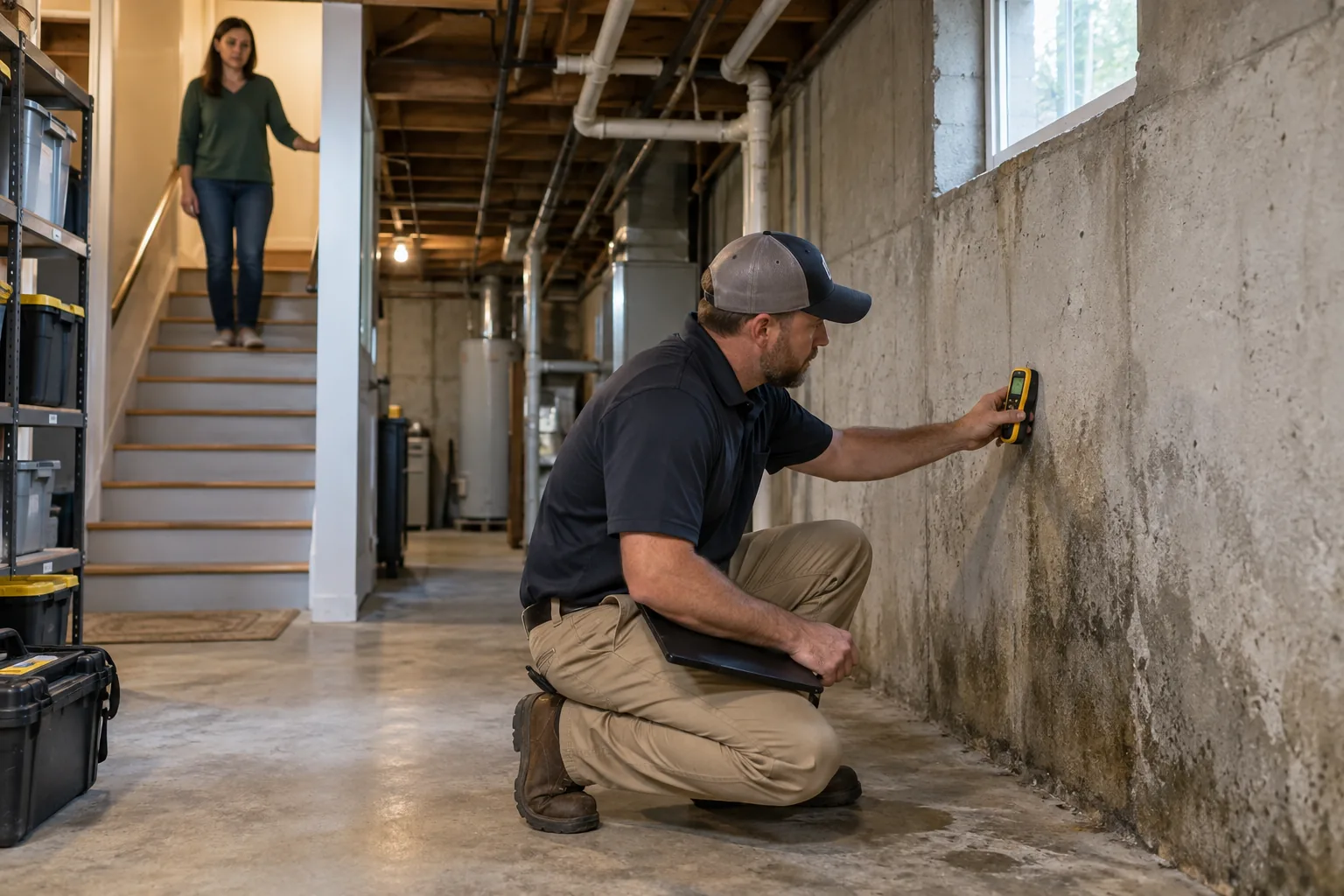
A musty basement may have visible growth, hidden growth behind finishes, damp stored contents, or simply high humidity. Before demolition, map the water path and determine whether the space is below grade, finished, conditioned, or connected to the HVAC system.
Trace the water path
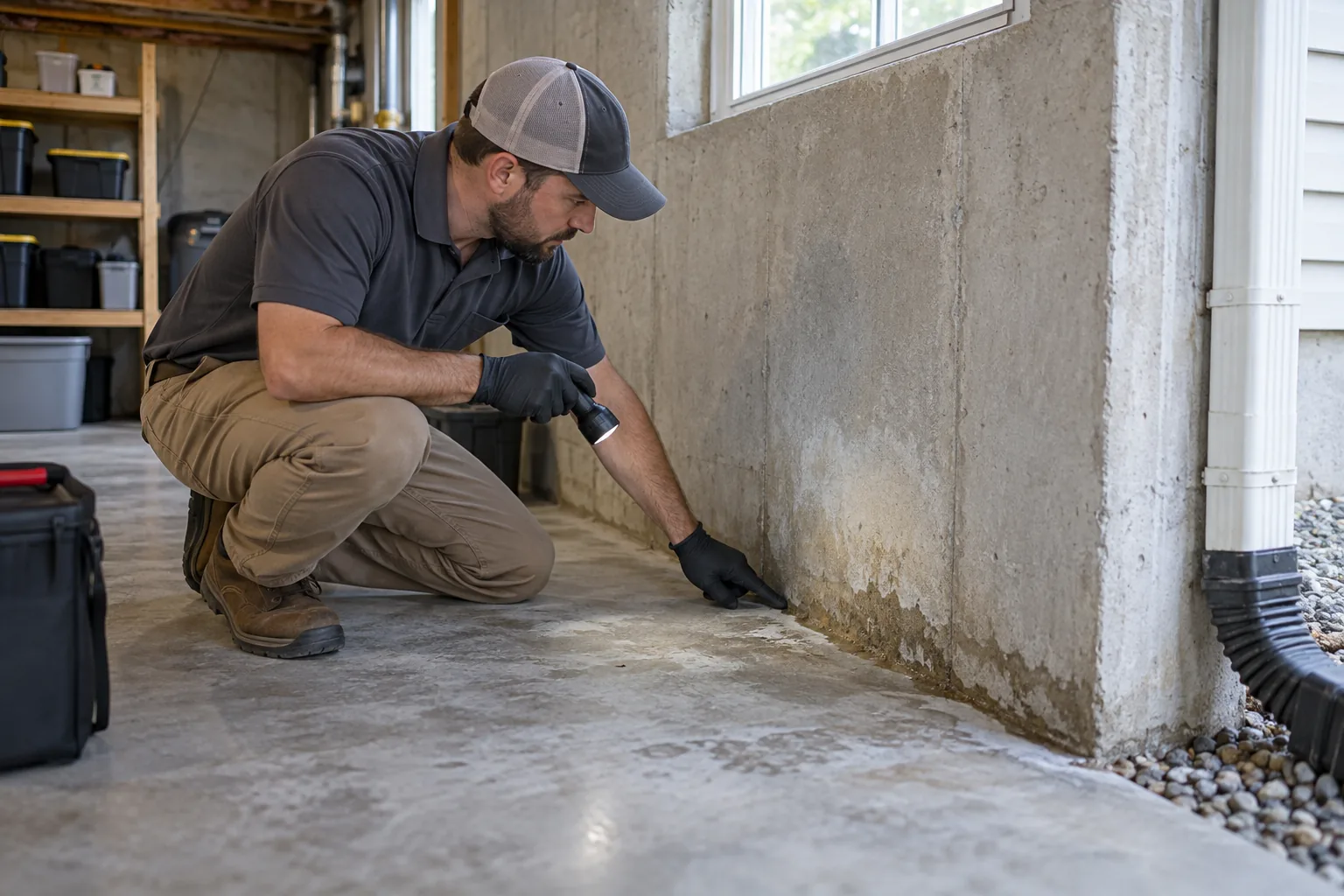
Look for wall or floor seepage after rain, plumbing leaks, sump or drain failure, condensation on cold surfaces, wet carpet edges, staining at baseboards, and humidity that remains elevated even in dry weather.
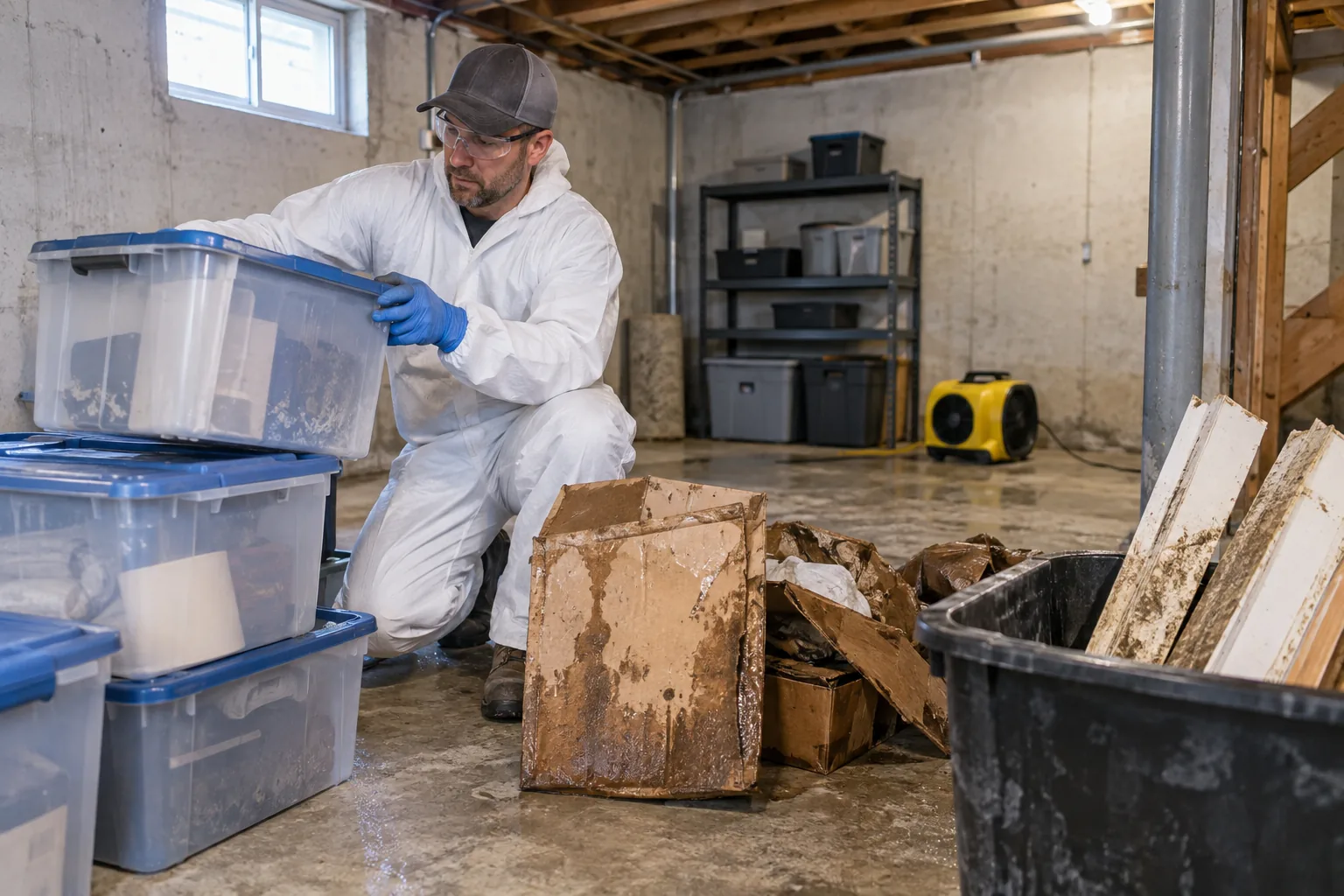
Triage materials
Cardboard, carpet pad, fiberboard, ceiling tile, and wet drywall are difficult to restore after established growth. Solid framing and hard surfaces may be cleanable if structurally sound and accessible. Contents need their own keep, clean, or discard decisions.
Do not rebuild into a moisture trap
Dryness should be demonstrated before installing insulation, drywall, flooring, or trim. A waterproof coating on the interior face may not resolve exterior drainage, cracks, hydrostatic pressure, or plumbing problems.
Compare drainage and dehumidification separately
Drainage manages liquid water. Dehumidification removes water vapor from the air. Some basements need one, some both, and neither replaces a repair for an active leak.
Questions homeowners ask
Will a dehumidifier remove existing mold?
Why does the basement smell musty without visible mold?
Sources and standards
Editorial guidance on this page is based on current public-health and contractor resources. A property-specific scope still requires an on-site assessment.