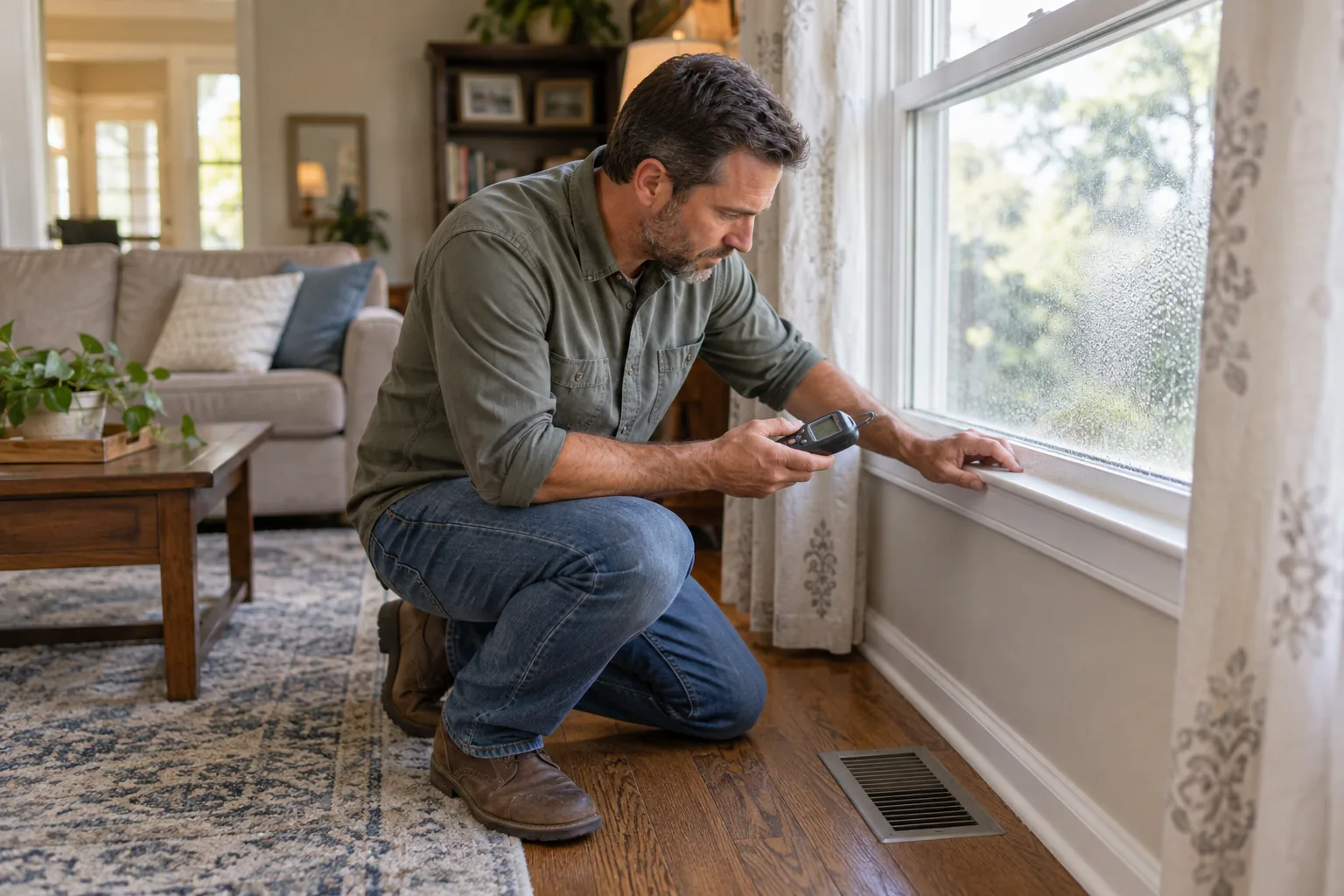
For Jackson, Tennessee homes, mold prevention is not a product list. It is a routine for keeping building materials dry, finding failures early, and verifying that repairs held.
5 mold-prevention techniques that work because they control moisture
- Repair leaks at the source
Watch supply lines, drain connections, roof penetrations, flashing, windows, condensate lines, and appliance hoses. A dry surface after rain does not rule out an intermittent leak.
- Dry wet materials promptly
CDC recommends fully cleaning and drying the home within 24–48 hours after flooding when possible. Open assemblies may need moisture measurements before closing.
- Keep indoor humidity controlled
EPA suggests keeping indoor relative humidity below 60%, ideally 30–50% when practical. Use measured data rather than running a dehumidifier blindly.
- Vent moisture outdoors
Bathroom fans, kitchen exhaust where appropriate, and clothes dryers should discharge outdoors, not into attics, crawl spaces, or wall cavities.
- Manage water around the foundation
Keep gutters, downspouts, drains, grading, crawl-space ground moisture, and sump systems functioning as a coordinated system.
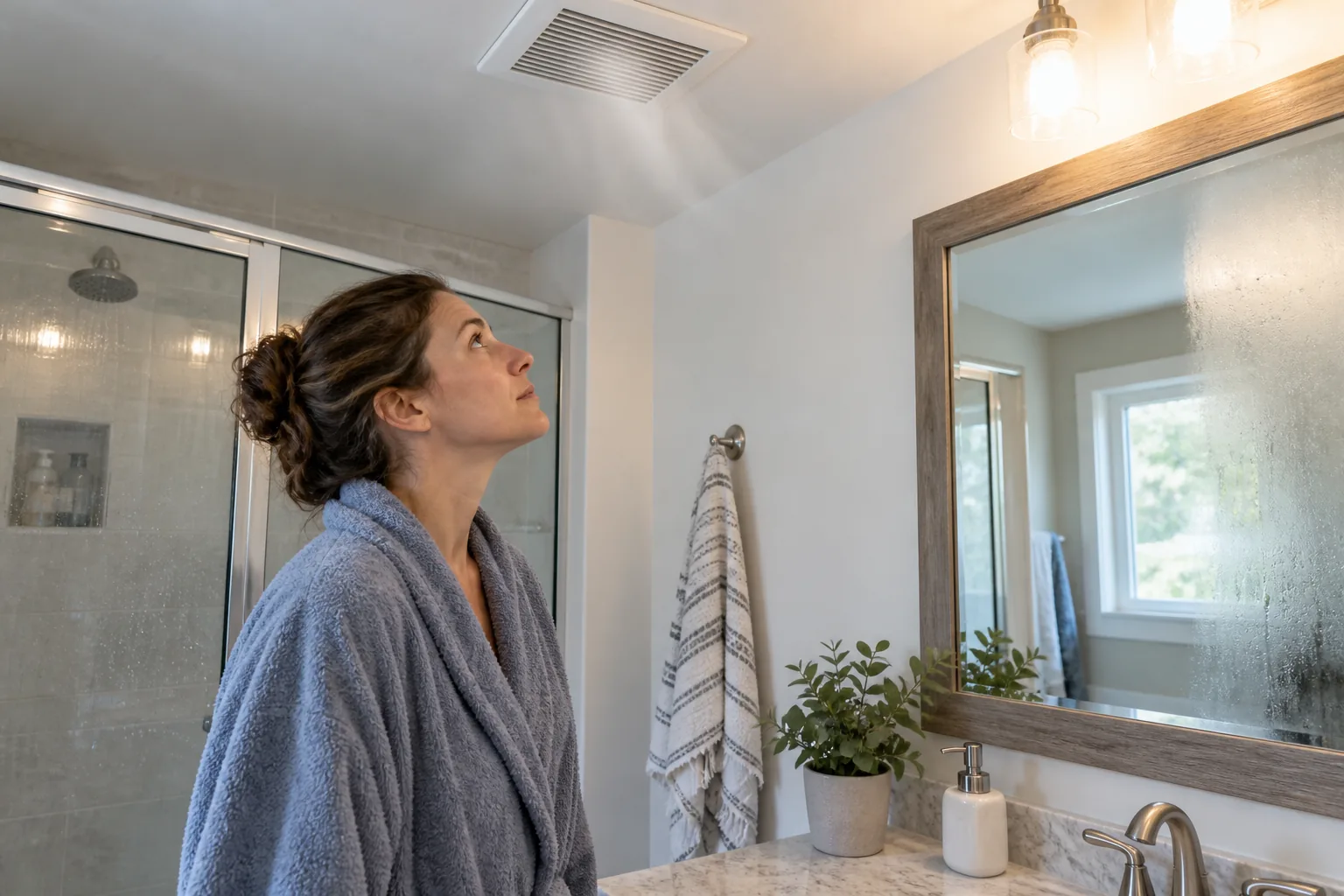
A five-minute monthly check
Look under sinks, around the water heater and HVAC drain, at bathroom ceilings, behind the washing machine, along exterior-wall closets, and at the crawl-space or attic access. Note odors and stains; compare photographs over time rather than relying on memory.
The 10-step mold-prevention checklist expands this routine with hidden-edge inspections, HVAC maintenance, storage, finish decisions, and follow-up after a trigger event.
Sources and standards
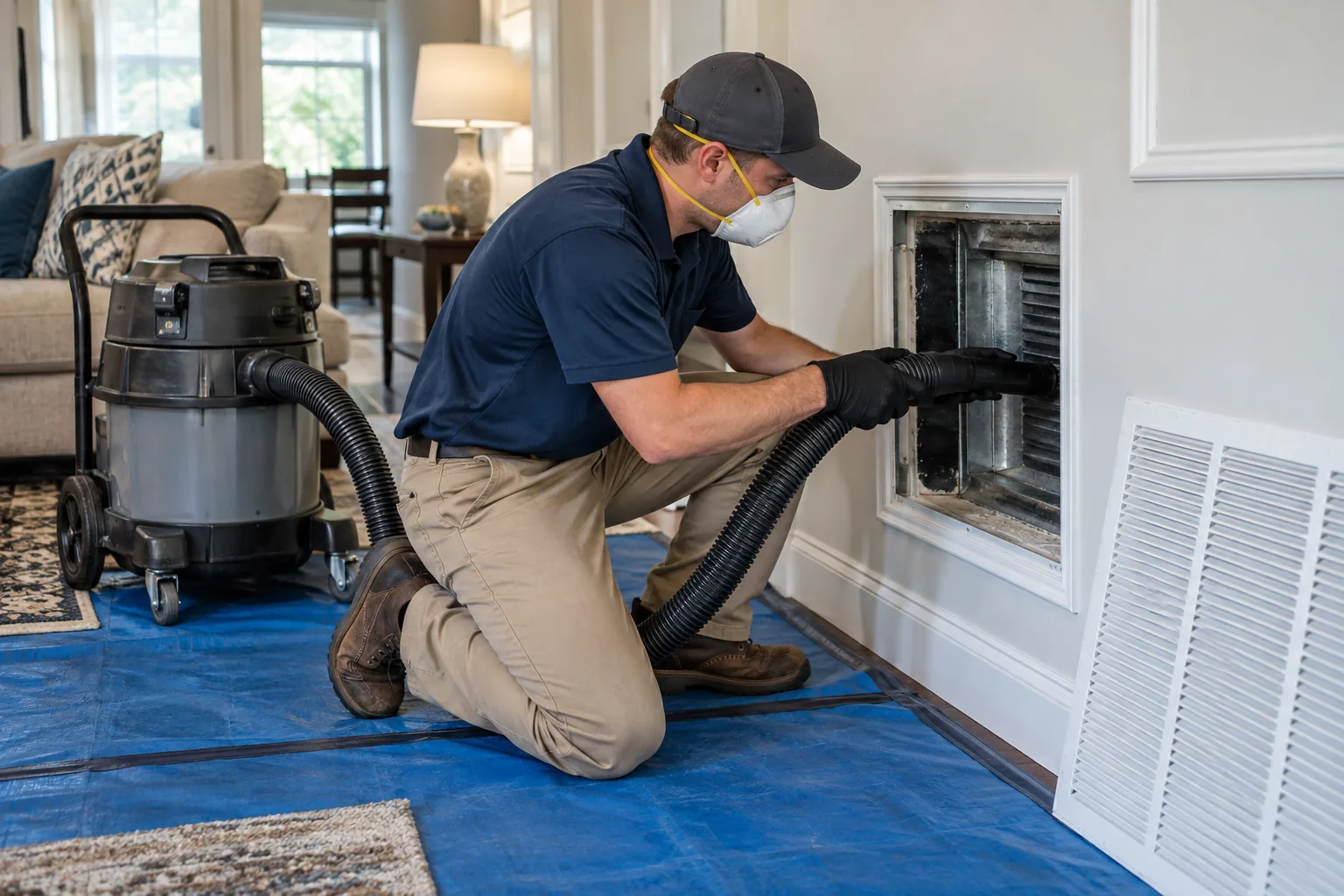
Editorial guidance on this page is based on current public-health and contractor resources. A property-specific scope still requires an on-site assessment.